
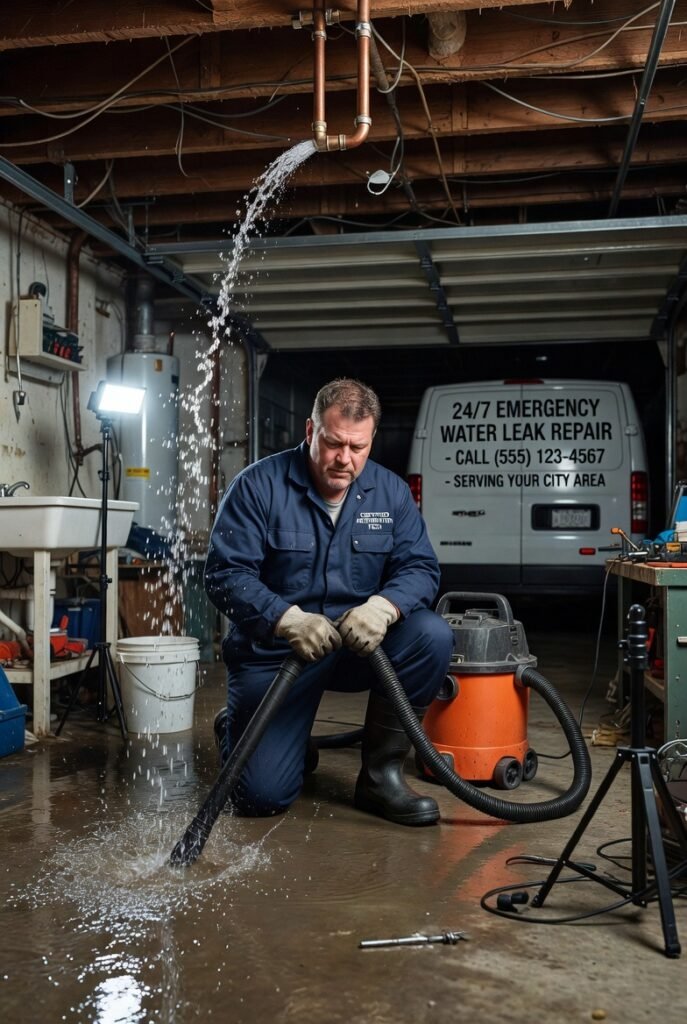
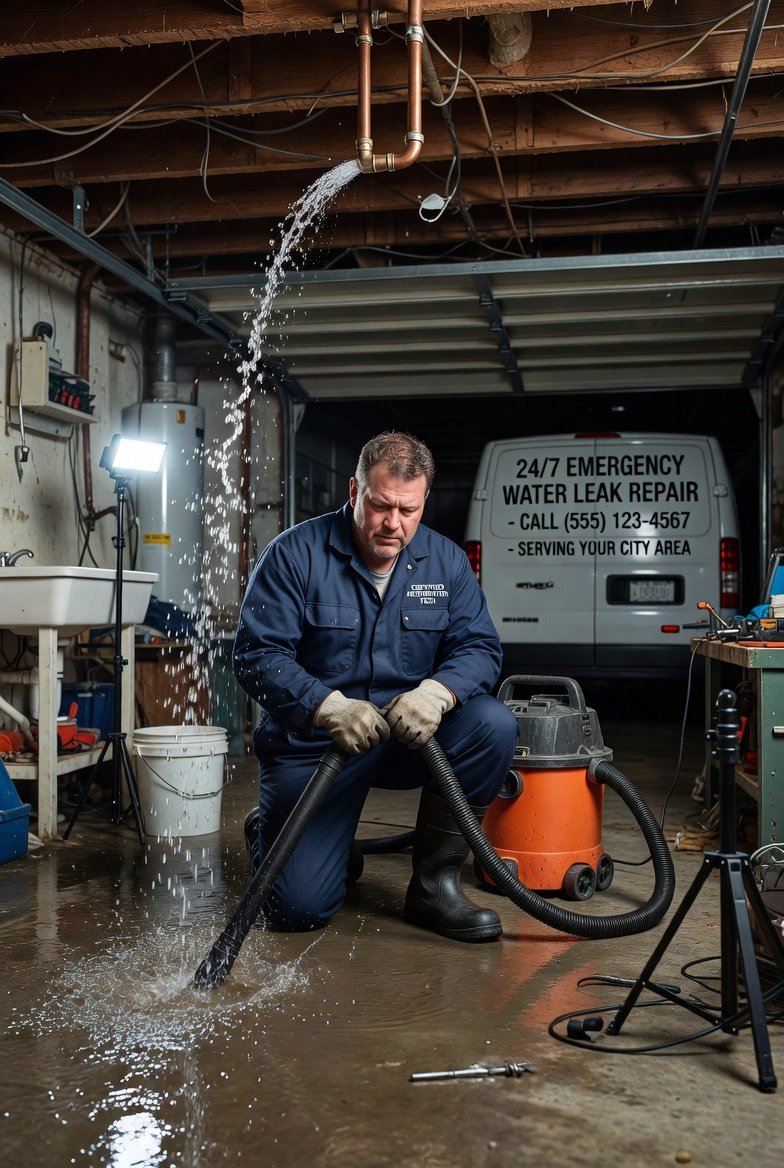
Basement Water Leak Repair Near Me: Who to Call and How to Fix It Right
Basement water is never something to “monitor.”
Once moisture enters a below-grade space, it can spread behind finished walls, weaken materials, trigger mold growth, and quietly turn a manageable repair into a structural problem.
The real risk isn’t just the water you see — it’s the pressure and pathways you don’t.
Most expensive mistakes happen when homeowners treat every basement leak like the same issue, even though the cause usually falls into one of two very different categories.
Basement leaks typically come from:
- Plumbing water (pipes, appliances, drains, sewer backup)
- Groundwater / drainage water (foundation seepage, hydrostatic pressure, grading problems, window wells)
Different cause → different professional → different fix.
This guide gives you:
- a safety-first plan
- plumber vs waterproofing vs restoration decision rules
- fix options that actually address the cause
- realistic cost ranges
- waterproofing cost
- a hiring filter that prevents patch jobs
On this page, “near me” means fast response + correct trade, not whoever bought the biggest ad.
60-Second Safety Check (Do This Before You Step Into Water)
- If there’s standing water, handle power first
Water and electricity are a dangerous combination.
- If water could reach outlets, cords, appliances, or your electrical panel:
- 👉 Turn off power at the main breaker only if you can reach it safely without stepping into water.
- If not — call your utility or a professional.
This is not a situation for guesswork.
- Identify the type of water quickly
- Clear water near pipes or appliances → often plumbing
- Water along the wall–floor seam after rain → often groundwater
- Sewer odor or drain backup → urgent
- Document the waterline
Take photos and mark the highest point with tape.
- Helps diagnosis and protects you if insurance becomes relevant
- Stop plumbing water if suspected
- Shut off the main valve
- Avoid running fixtures until the cause is clear
Is Water in a Basement an Emergency?
Sometimes — especially when:
- Water is rising
- Electrical systems could be affected
- Finished materials are soaking
Even slower seepage deserves prompt attention because below-grade moisture tends to spread before becoming fully visible.
Acting early typically reduces both structural risk and total repair cost.
Who to Call for Basement Water Leak Repair Near Me
Basement calls go wrong when homeowners contact the wrong trade first.
Call a PLUMBER when you see:
- Water spraying or dripping from pipes
- Wet areas near a water heater or mechanical room
- Leaks tied to laundry, showers, or flushing
- Floor drain overflow or sewer smell
A plumber fixes pressurized water problems and fixture failures.
Call a BASEMENT WATERPROOFING / DRAINAGE contractor when:
- Water seeps through walls or floor cracks
- It appears mainly after rain or snowmelt
- Window wells fill
- Dampness follows a seasonal pattern
Waterproofing addresses foundation entry paths and exterior water pressure.
Call a WATER MITIGATION / RESTORATION company when:
- Carpet or drywall is wet
- There’s significant standing water
- Rapid drying is needed
- Water leak detection service
Restoration controls damage first — then you fix the cause.
One-Line Decision Rule
- Plumbing source → plumber
- Rain-driven seepage → waterproofing
- Finished basement soaked → restoration first
Fast Diagnosis: Plumbing Water or Groundwater?
You don’t need a perfect diagnosis — just the right direction.
Likely plumbing:
- One localized wet area
- Water appears during fixture use
- Warm water clues
- Dripping behind walls below bathrooms
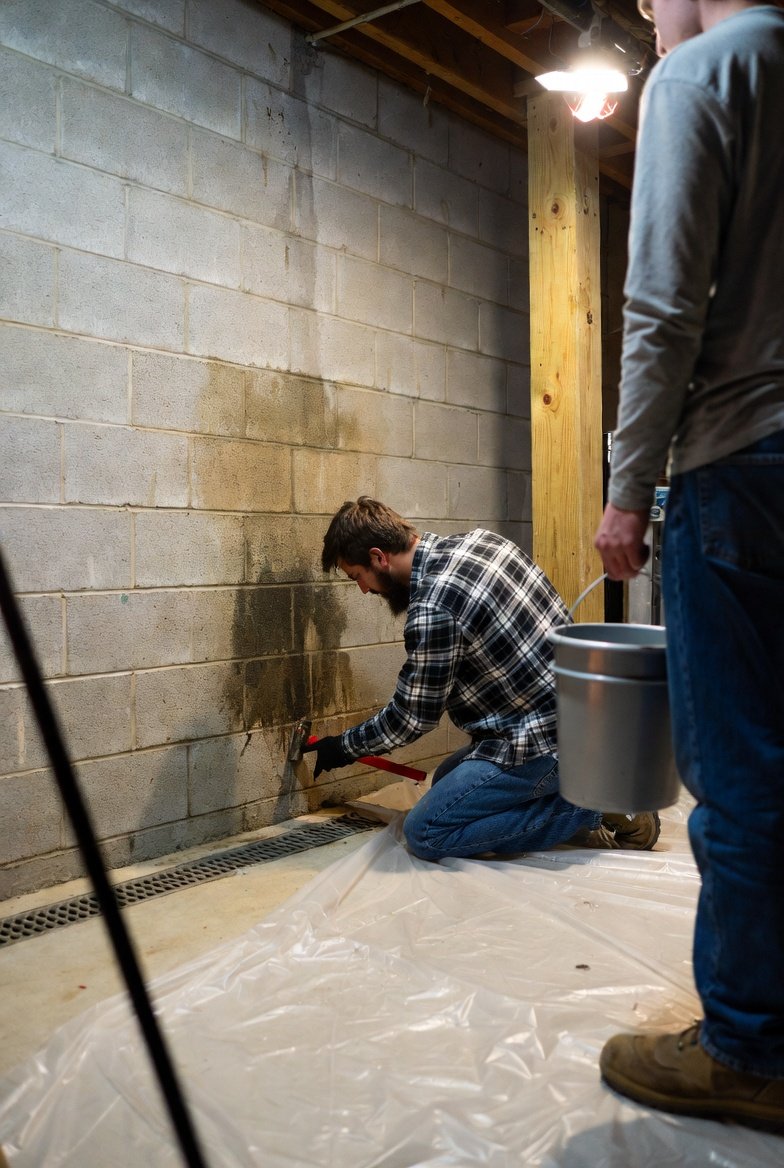
Likely groundwater:
- Appears after storms
- Damp wall–floor joint
- White chalky residue on concrete
- Seasonal musty smell
- Saturated soil near foundation
What a Real Basement Leak Repair Looks Like
A legitimate repair does TWO things:
✅ Stops water entry
✅ Prevents recurrence under similar conditions
Experienced waterproofing professionals often emphasize that controlling the water path matters more than temporarily sealing the visible entry point.
Plumber (plumbing leaks)
- Pinpoints the failing line
- Repairs or replaces components
- Pressure-tests if needed
- Verifies normal operation
Waterproofing / drainage
- Traces the water pathway
- Corrects grading or drainage
- Addresses cracks or intrusion points
- Explains success criteria and warranty
If someone recommends only waterproof paint — be cautious. Coatings rarely defeat hydrostatic pressure.
Restoration / mitigation
- Extracts water
- Deploys drying equipment
- Monitors moisture
- Removes unsalvageable materials
Basement Leak Fix Options (From Simple to Structural)
- Downspouts + grading
- Often the highest ROI fix
- Common issues: downspouts dumping near foundation, soil sloping toward the home, overflowing gutters
- Window well corrections
- Clear debris
- Improve drainage
- Add covers
- Adjust surrounding grade
- Foundation crack repair
- Effective for isolated entry points — but not a cure if multiple pathways exist
- Interior drainage + sump pump
- Channels water safely away
- Common for recurring seepage
- Exterior waterproofing
- More invasive — but sometimes the true long-term solution
- Interior systems often manage symptoms
- Exterior systems can stop water before it enters
- Dehumidifier
- Helpful for moisture control — not a standalone fix
Cost Ranges (Reality, Not Guesswork)
Basement leak repair might mean a few hundred dollars — or several thousand — depending on cause and scope.
- Interior waterproofing: around $3,000
- Exterior waterproofing: roughly $7,000+
Prices shift based on:
- Finished basement demolition
- Drainage footage
- Pump complexity
- Excavation access
- Severity of intrusion
Quick Cost Direction Table
Basement Problem | Typical Fix | Why Costs Move |
Burst pipe | Plumber | Access + cleanup |
Appliance leak | Plumber | Parts + labor |
Sewer backup | Plumber | Blockage severity |
Cove joint seepage | Drainage system | Linear footage |
Crack intrusion | Injection | Pressure risk |
Chronic wet basement | Interior/exterior system | Project scope |
Hiring a Local Basement Leak Repair Pro
Search results overwhelm homeowners. Use this filter.
Ask these questions:
- “Is this plumbing water or groundwater — and why?”
- “How will you confirm the cause?”
- “What exactly is included?”
- “How do you prove the repair worked?”
- “Where does sump discharge go?”
- “What warranty is offered?”
- “Is it transferable?”
- “Are permits required?”
- “Can I get an itemized invoice?”
Red Flags:
- 🚩 Can’t identify the water type
- 🚩 Pushes one-size systems
- 🚩 Avoids drainage discussions
- 🚩 High-pressure contracts
Insurance Reality (Basement Water Has Rules)
Policies often cover sudden plumbing failures.
Rain-driven flooding and groundwater are commonly excluded unless you carry endorsements such as water-backup coverage.
If a claim is possible:
- Document entry points
- Save invoices
- Mitigate quickly
- Stick to observable facts
- insurance coverage guide
Limitations
- This guide cannot diagnose your foundation remotely
- Labor rates vary
- Safety always beats speed when electricity may be involved
Quick Decision Matrix
Step | Action |
Best immediate step | Handle power → document → isolate source |
Best first call | Plumber vs waterproofing |
Finished basement soaked | Mitigation first → then fix cause |
Handled in this order, basement leaks usually stay manageable — instead of becoming repeat disasters.