
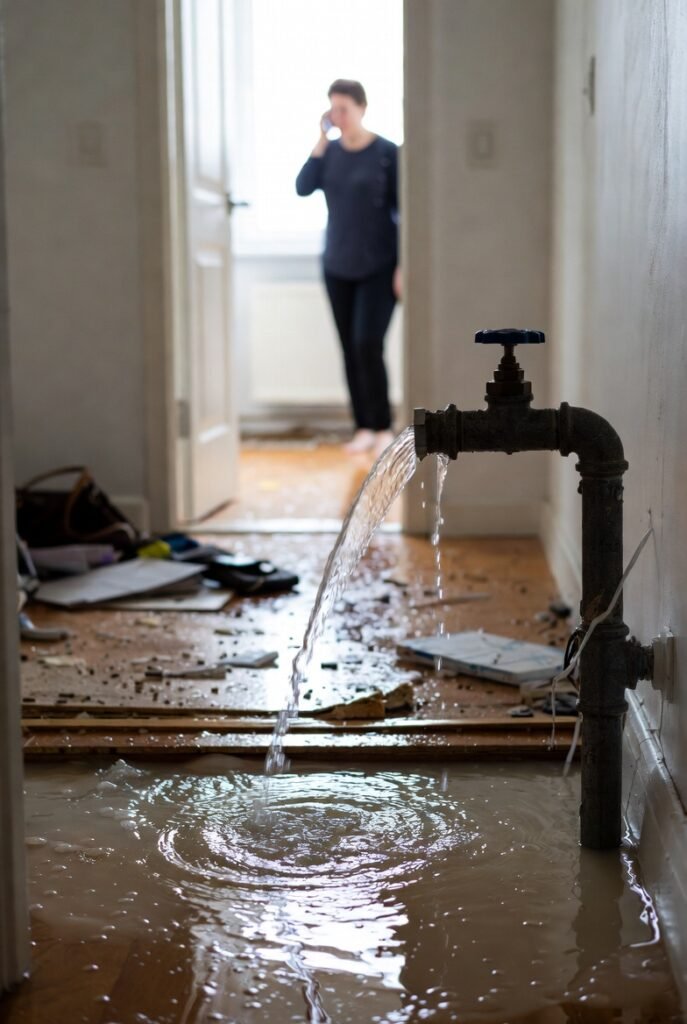
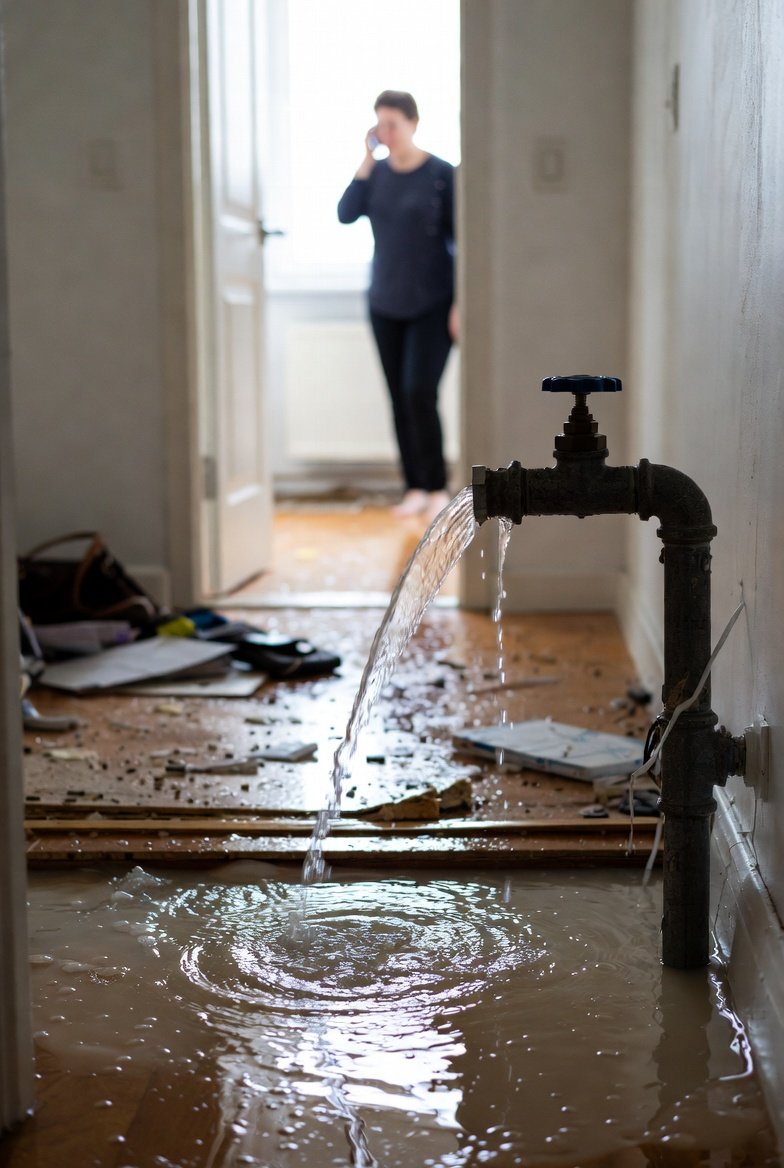
Water Leak Emergency
When a water leak turns into an emergency, hesitation causes damage — not the water alone.
Fast, structured action protects your home, reduces repair scope, and prevents secondary problems like mold.
If this is happening right now, focus on three priorities:
- Stay out of electrical danger
2. Stop the incoming water
3. Slow the spread immediately
Everything else comes after control.
Federal safety guidance consistently warns that wet materials should be dried within 24–48 hours to reduce mold risk — which is why the first hour matters more than most homeowners realize.
This is your real emergency playbook.
No filler. No theory. Just what works when minutes count.
⚠️ Immediate Safety Boundary (Read This First)
Treat every indoor water emergency as if electricity is involved until proven otherwise.
Leave the area and call for help immediately if you notice:
- buzzing sounds
- burning smells
- sparking outlets
- submerged extension cords
- water reaching the breaker panel
Do NOT touch:
- outlets
- plugged-in devices
- electrical panels
- cords
No property is worth electrical injury.
If you can safely shut off power without stepping into water, do so.
If you cannot — evacuate the area and call emergency services.
The 10-Minute Water Leak Response Plan
Minute 0–2: Kill the Risk
- Avoid standing water.
- Shut off electricity to the affected zone if safe.
- Keep others — especially children — away.
Safety always comes before property.
Minute 2–4: Stop the Water
Start with the smallest shutoff. Escalate if needed.
Fixture shutoffs (fastest option):
- Toilet → valve behind the base
- Sink → hot/cold valves underneath
- Washer → supply valves
- Water heater → cold inlet valve
If water is still flowing or the source is unclear:
👉 Shut off the main water valve immediately.
Emergency preparedness organizations like the American Red Cross recommend knowing this location in advance so incoming water can be stopped quickly during plumbing failures.
👉 (Internal link: Main Water Shutoff Valve — Where It Is and How to Turn It Off)
After closing it, briefly open the lowest faucet to relieve pipe pressure.
Where Is the Main Water Shutoff Usually Located? (Snippet Block)
Most homes place the main valve in one of these areas:
- Basement wall near the front foundation
- Crawl space where the water line enters
- Garage utility wall
- Exterior wall near the water meter
Turn the valve clockwise until it stops (for most gate valves) or rotate the lever perpendicular to the pipe (ball valve).
Knowing this before an emergency is one of the highest-impact homeowner habits.
Minute 4–7: Contain the Spread
Water travels faster than people expect.
Every minute containment is delayed increases repair scope.
- Place buckets under active drips
- Move rugs, furniture, and electronics
- Block doorways with towels
- Remove pooled water using towels or a wet/dry vacuum if safe
Containment is structural protection — not cosmetic cleanup.
Minute 7–10: Document — Then Keep Moving
Take fast photos of:
- the source
- water paths
- damaged materials
Then stop documenting.
Prevention beats perfect records.
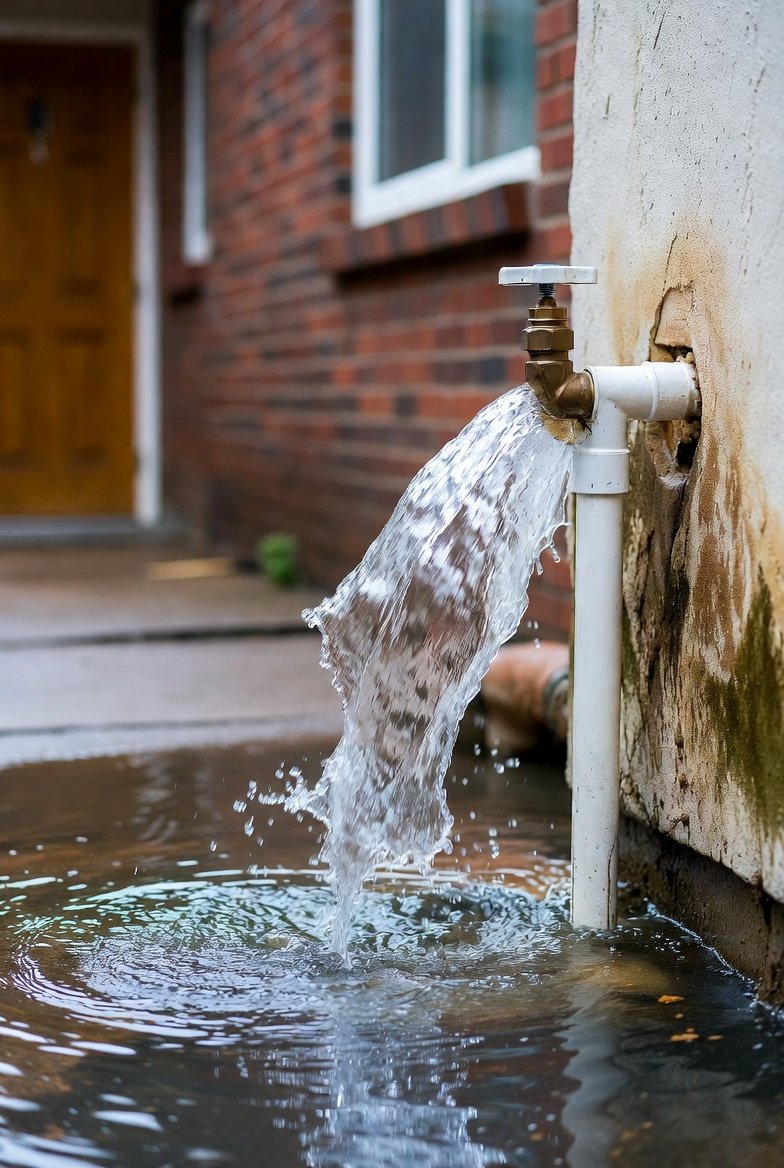
The Mold Clock Starts Now
The EPA notes that when damp materials are dried within 24–48 hours, mold growth is unlikely in most cases.
FEMA warns mildew and mold can begin developing inside that same window.
The CDC similarly advises drying homes quickly after water exposure.
Real-world meaning:
If drywall, carpet padding, insulation, or subfloor is soaked — your plan should be dry today, not eventually.
👉 Drying Water Damage Fast — The 24–48 Hour Playbook)
When to Call Emergency Help Immediately
Do not monitor these situations.
Act.
- You cannot stop the water
- Water is approaching electrical systems
- A ceiling is sagging or bulging
- Water is rising in a basement
- A drain is backing up
- The leak involves a hidden pipe
- Water appears contaminated
These are structural-risk scenarios.
👉 Emergency Water Leak Repair Near Me)
The One Rule That Prevents Most Expensive Mistakes
If water is actively flowing → call a plumber first.
If the flow is stopped but materials are soaked → call restoration next.
Stop the source.
Then dry the structure.
This sequence prevents demolition that didn’t need to happen.
👉 Water Leak Detection Services)
Who to Call (Fast Routing Guide)
Call a Plumber When:
- pipes burst
- fixtures fail
- toilets overflow
- supply lines rupture
- water heaters leak
Active flow = plumbing priority.
Call a Water Damage Restoration Company When:
- drywall is saturated
- carpet padding is wet
- insulation absorbed water
- wood flooring swelled
Public safety guidance consistently emphasizes rapid extraction and drying to reduce secondary damage.
Speed matters more than most homeowners realize.
Call a Roofer When:
- leaks follow storms
- stains form near exterior walls
- water appears around skylights or chimneys
Call an Electrician When:
- water traveled through ceiling fixtures
- breakers trip repeatedly
- wiring may be wet
Electrical risk is never guesswork territory.
Emergency Mistakes That Quietly Multiply Damage
Turning Power Back On Too Soon
Wet wiring can remain dangerous even when surfaces look dry.
Fixing Drywall Before Stopping the Leak
Cosmetic repairs trap moisture.
Trapped moisture breeds mold.
Painting Over Damp Materials
Seal moisture inside a wall and the odor usually follows.
Running HVAC While Materials Are Wet
Forced air can spread humidity — and sometimes contaminants — through the home.
Dry first. Circulate later.
Waiting Until Tomorrow
Mold doesn’t wait.
Neither should your drying plan.
What To Do After the Leak Is Stopped (Next 2–6 Hours)
Remove Standing Water First
- towels
- mops
- wet vac if safe
- lift rugs
Separate “Dryable” vs “Likely Removal” Materials
Often salvageable:
- tile
- sealed concrete
- some hardwood if caught early
Often risky if saturated:
- carpet padding
- particleboard
- soaked drywall
- insulation
Restoration professionals use moisture meters to confirm dryness — not guess.
Start Drying Aggressively (If Power Is Safe)
- fans
- dehumidifiers
- airflow
Open windows only when outdoor humidity is lower than indoors.
Watch for Hidden Wet Zones
Moisture commonly hides:
- behind baseboards
- beneath cabinets
- under vinyl flooring
- inside wall cavities
Hidden moisture is where odors usually begin.
Rapid Scenario Guide (No Guessing Under Stress)
Emergency | First Move | Who to Call |
Bulging ceiling | Shut off power → stop water | Plumber or roofer |
Basement flooding | Avoid standing water → cut power | Plumber + restoration |
Burst pipe | Shut off main valve | Plumber |
Water heater leak | Close inlet → shut breaker | Plumber |
Hidden wall leak | Stop main → limit spread | Leak detection |
👉 Ceiling Water Leak Repair Near Me, Basement Water Leak Repair Near Me)
Hiring Fast Without Getting Burned
Pressure makes homeowners accept the first available contractor.
Structure prevents regret.
Ask:
- What is your response window?
- Do you stop the source or only dry?
- Do you use moisture meters?
- Are you licensed and insured?
- Is there an emergency fee?
- What should I do while waiting?
Red Flags
- refuses to explain pricing
- pushes demolition immediately
- cannot define what “dry” means
Professional work has measurable endpoints.
Insurance Reality (Keep It Behavioral)
Policies vary — but smart documentation is universal.
Capture:
- photos
- timeline
- invoices
- mitigation vs restoration
Avoid guessing the cause if unconfirmed.
When in doubt, verify details directly with your insurer.
👉 Does Homeowners Insurance Cover Water Damage?)
Limitations (But Important Ones)
Remote diagnosis isn’t realistic.
Electrical hazards override convenience.
Drying targets vary by material — but the 24–48 hour window remains a reliable urgency trigger.