
Ceiling Water Leak: How to Diagnose the Cause, Spot Urgency Signs, and Fix It Safely
A brown ring spreading across drywall.
A drip landing in the middle of the room.
A ceiling that suddenly feels soft.
A ceiling water leak is not cosmetic damage. It’s trapped moisture inside insulation, framing, drywall, or wiring cavities — and misdiagnosis multiplies repair costs.
The goal is not to guess.
The goal is:
Contain → classify → confirm → isolate → repair correctly → dry properly.
If water is actively pouring or the ceiling is heavily bulging, start here first:
water-leak-emergency
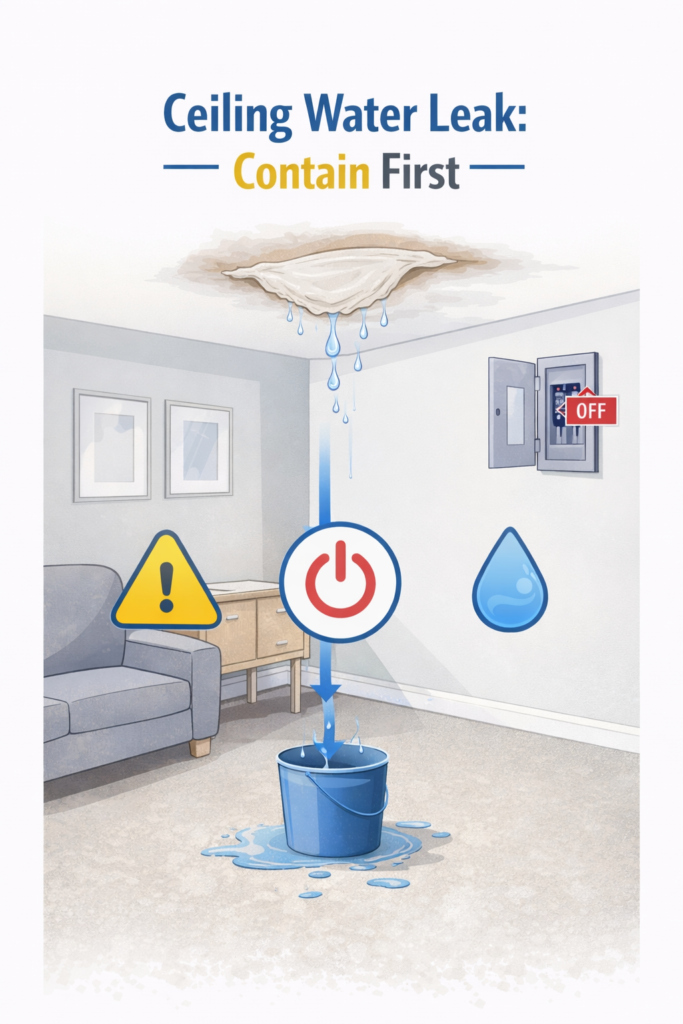
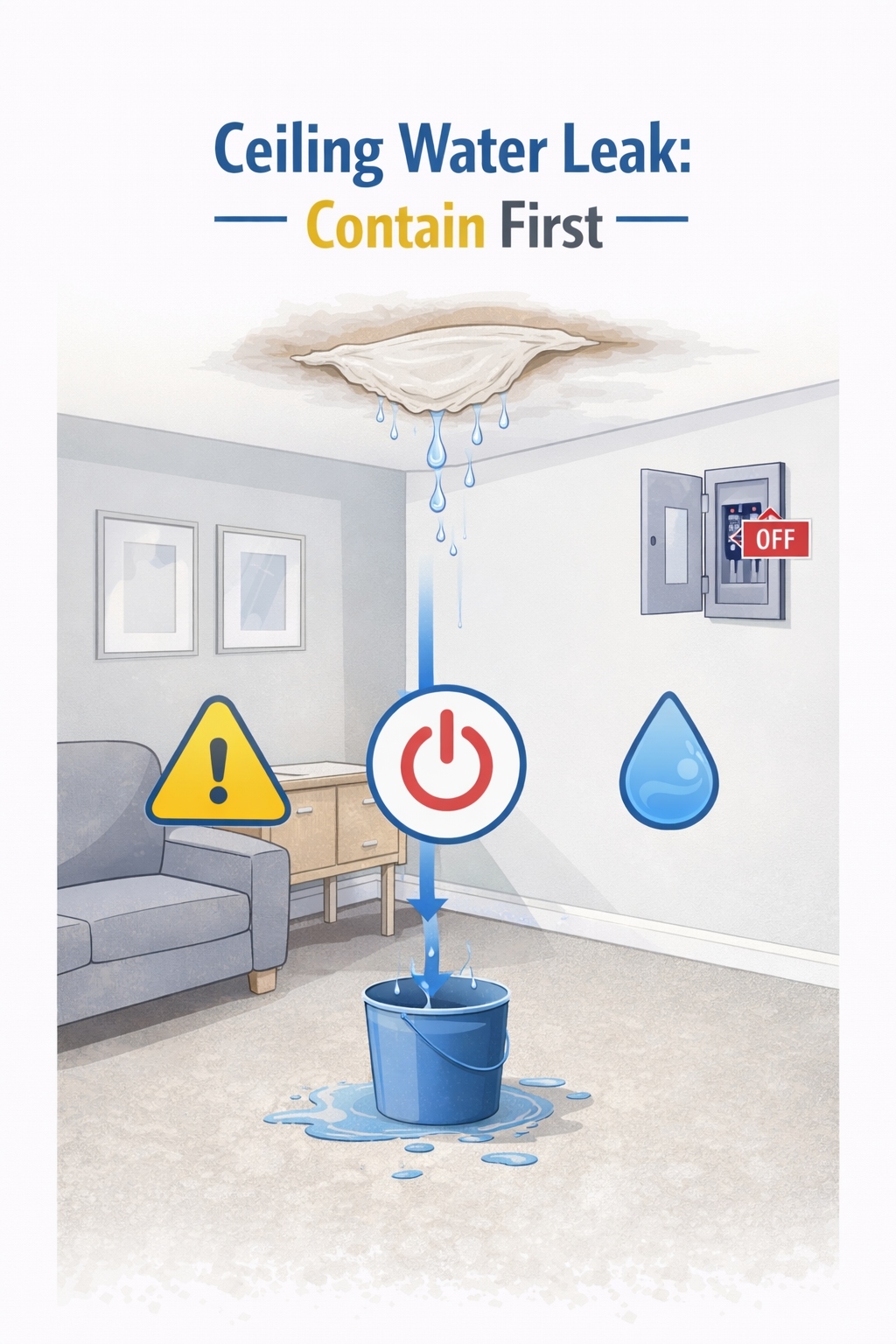
Step 1 — Contain the Damage Immediately
Before locating the source:
- Place a bucket under the drip
• Move electronics and furniture
• If drywall is sagging, carefully puncture the lowest point to release trapped water
• Shut off power to the affected room at the breaker
• Take photos for documentation
Why draining matters
Trapped water increases downward load.
A small sag can become sudden collapse within hours.
Water + electrical wiring = immediate hazard.
Power off first. Always.
Step 2 — Determine Urgency Level (Structural Risk Filter)
Condition | Urgency | Why It Matters |
Active dripping | 🚨 Immediate | Ongoing structural saturation |
Bulging drywall | 🚨 Immediate | Collapse risk |
Water near lights | 🚨 Immediate | Electrical hazard |
Stain spreading | ⚠ Moderate | Leak worsening |
Dry ring only | ⚠ Monitor | Possibly historical |
Damage Severity Tiers (Financial + Structural Context)
Tier 1 — Surface Stain Only
- No softness
- No active moisture
- Likely old leak
Repair: stain blocking + paint
Tier 2 — Active Moisture, No Structural Sag
- Drips present
- Wet insulation above
Repair: locate source + dry cavity
Typical drywall repair range: moderate
Tier 3 — Structural Saturation
- Bulging ceiling
- Insulation soaked
- Framing damp
Repair: source repair + drywall removal + drying equipment
Cost increases significantly if ignored
Delay turns Tier 2 into Tier 3.
Step 3 — Confirm Whether It’s an Active Plumbing Leak
If the ceiling is below a bathroom, kitchen, or laundry:
Turn off all fixtures.
Perform a water meter confirmation test:
If the meter moves → active pressurized supply leak likely.
If the meter does not move, you may be dealing with:
- Drain leak
• Roof intrusion
• HVAC condensation
For deeper locating logic:
how-to-find-a-water-leak-in-your-house
Step 4 — Identify the Leak Type
Most ceiling leaks originate from four systems.
1) Roof or Exterior Intrusion
Signs:
• Appears after rain
• Near exterior walls
• Around chimneys, skylights, vent stacks
Water often travels along rafters before dropping.
Roof repairs must occur before drywall patching — or the leak returns.
2) Plumbing Supply Leak (Pressurized)
Signs:
• Continuous drip
• Meter confirms flow
• May reduce water pressure
Common sources:
• Shower valve body
• Supply line fitting
• Upstairs toilet fill line
• Ice maker line
These leaks worsen quickly.
3) Drain / Overflow Leak (Non-Pressurized)
Signs:
• Appears only during water use
• No meter movement
• Common under showers/tubs
Timed test:
Run shower 5–8 minutes
Stop
Wait 10–15 minutes
Check ceiling
Drain leaks often mislead because they are event-triggered.
4) HVAC Condensation Failure
Often misdiagnosed as plumbing.
Occurs when:
- Condensate drain line clogs
• Secondary pan fills and overflows
• Float switch fails
• Ductwork sweats in attic
If leak appears only when AC runs — inspect:
- Condensate line blockage
• Air handler drain pan
• Safety float switch
• Insulated duct seams
This is extremely common in warm climates.
Step 5 — Ceiling Travel Pattern Logic
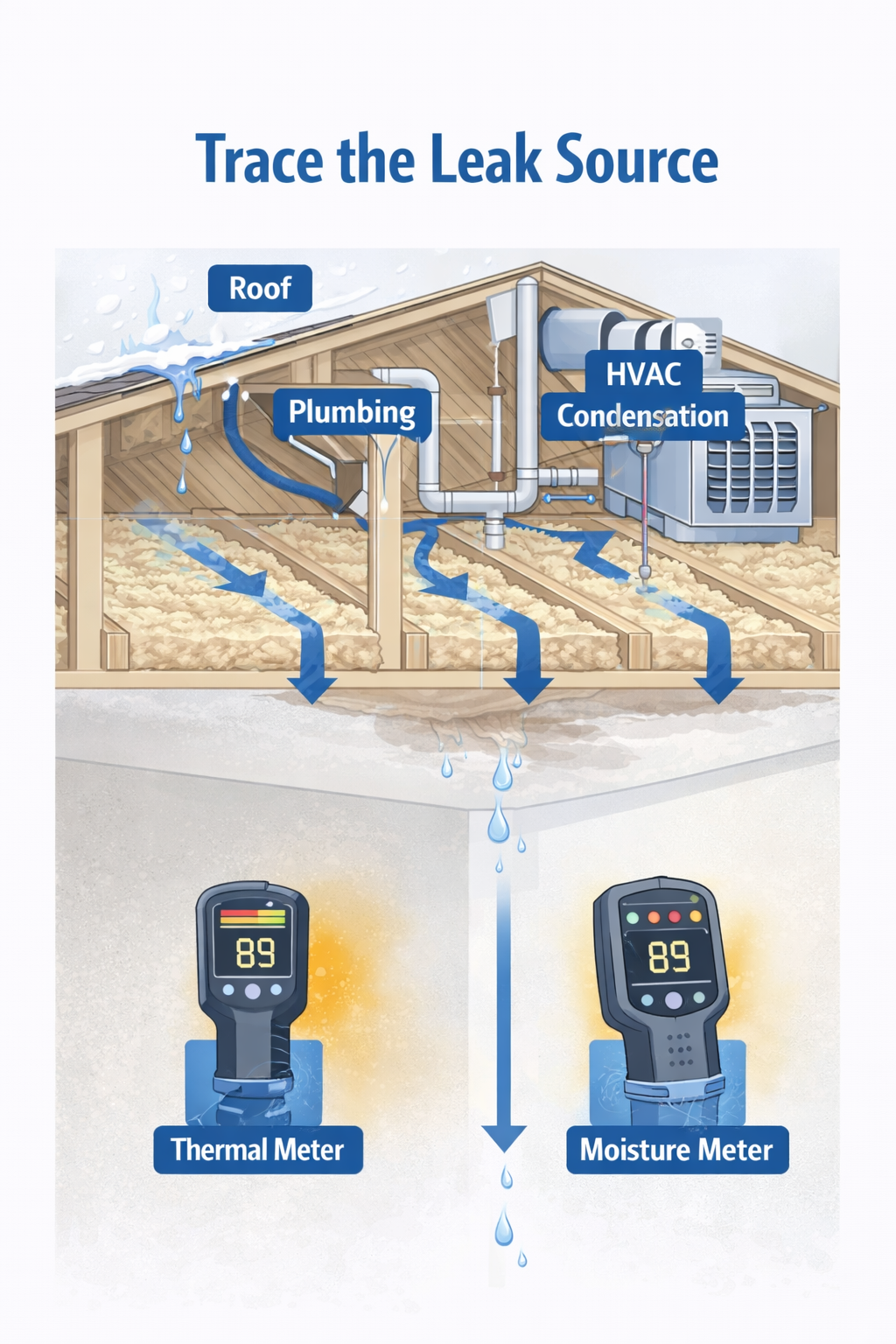
Water rarely falls straight down.
It travels:
- Along joists
• Through insulation
• Across drywall seams
• Down framing cavities
The visible stain is the lowest exit point — not the source.
If attic access exists:
Find the highest wet insulation.
Trace upward to the wettest decking area.
That’s your origin direction.
Step 6 — Isolation Testing (If Plumbing Suspected)
A) Supply Leak Check
Turn off house main.
If leak stops → supply line issue.
If not → roof/HVAC/drain likely.
B) Drain Timed Test
Run fixtures individually.
Never test multiple at once.
Moisture appearing only after use confirms drain-related origin.
Step 7 — When to Open the Ceiling
Only cut drywall if:
- Source narrowed to specific cavity
• Leak persists
• Attic confirms localized moisture
Cut a small inspection opening first.
Avoid cutting near wiring.
Random cutting increases labor and repair cost.
Step 8 — Mold & Drying Timeline (Critical)
Moisture timeline reality:
- 0–24 hours: saturation begins
• 24–48 hours: mold growth risk increases
• 48–72 hours: insulation often must be replaced
• 3–7 days: framing moisture can spread
Drying protocol after leak stops:
- Remove saturated insulation
• Use dehumidifier + air movement
• Monitor moisture levels
• Replace drywall only after cavity dries
Painting over damp drywall traps moisture and creates hidden mold.
Step 9 — Repair Cost Context (Why Speed Matters)
Ignoring a ceiling leak increases cost exponentially.
Example escalation pattern:
Small roof flashing repair → minor cost
Ignored → insulation replacement + drywall removal
Ignored further → framing damage + mold remediation
Plumbing leak ignored can increase water bills rapidly and cause ceiling collapse.
Fast classification saves money.
Step 10 — Hard Stop / Call Boundaries
Call professional leak detection if:
- Ceiling continues leaking after isolation
• Electrical wiring exposed
• Sagging significant
• Leak repeats after roof patch
• Slab or service line suspected
Professional services:
water-leak-detection-services
Cost overview:
water-leak-detection-cost
Who handles what:
water-leak-in-house-who-to-call
Common Mistakes
- Assuming stain is directly under source
• Ignoring rain correlation
• Cutting drywall too early
• Forgetting HVAC condensation
• Skipping meter confirmation
Prevention Protocol
- Inspect roof after storms
• Clean gutters seasonally
• Flush HVAC condensate line annually
• Replace aging supply hoses
• Inspect attic insulation yearly
Preventative maintenance costs less than ceiling replacement.
FAQs
What causes water to leak from a ceiling?
Roof damage, plumbing supply leaks, drain leaks, or HVAC condensation are the most common causes.
Is a ceiling water leak dangerous?
Yes. It can create electrical hazards, mold growth, insulation damage, and structural collapse if ignored.
How do I know if it’s roof or plumbing?
If leak appears after rain → likely roof.
If it worsens during water use → likely plumbing.
If it occurs during AC operation → likely HVAC condensation.
Should I puncture a sagging ceiling?
Yes — carefully, at the lowest point, after turning off power to relieve trapped water and prevent sudden collapse.
How quickly can mold develop after a ceiling leak?
Mold risk increases within 24–48 hours if moisture remains trapped inside insulation or drywall.