
How to Stop a Leak
Leak Happening Right Now? Do These 3 Things Immediately
- Shut off the water (fixture valve first → main valve if needed)
- Avoid electrical contact — assume risk until proven safe
- Contain the spread so structural materials don’t soak
Stop the water first. Everything else is damage control.
Most homes aren’t ruined because a pipe failed — they’re ruined because water kept moving while someone searched for answers.
This is a containment playbook, not a repair manual.
Your objective is simple:
Stop flow → stay safe → limit spread → start drying → hand off to the right pro.
Immediate Safety Boundary (Read Before Touching Water)
Treat every indoor leak as if electricity is involved.
Leave immediately and call for help if you notice:
- burning smells
- buzzing sounds
- sparks
- submerged cords
- water approaching the breaker panel
Do NOT touch outlets, cords, or the electrical panel if wet.
If you can safely shut off power without stepping into water, do it.
If you cannot — evacuate the area.
No property is worth electrical injury.
The Mold Clock Starts Now
Federal housing guidance consistently notes that drying wet materials within 24–48 hours significantly reduces mold risk.
Real-world meaning:
Drywall and carpet padding are rarely “wait and see” materials.
If they’re soaked, speed matters more than perfection.
👉Drying Water Damage Fast — The 24–48 Hour Playbook)
The Rapid Leak Containment Checklist
Follow this sequence. Don’t improvise.
Step 1 — Stop the Water
The fastest way to limit damage is shutting off water at the closest valve.
Local Shutoffs (Use First)
- Toilet: valve behind the base
- Sink: hot/cold valves underneath
- Washing machine: supply valves behind unit
- Dishwasher: usually under the kitchen sink
- Water heater: cold inlet valve
If the leak slows or stops — you’ve bought time.
Step 2 — Use the Main Shutoff If Needed
If the leak is fast, hidden, or you can’t locate the fixture valve, shut off the home’s main water valve immediately.
Emergency preparedness organizations like the American Red Cross recommend turning off incoming water when pipes are damaged.
After shutting it off, briefly open a low faucet to relieve pressure.
👉 Main Water Shutoff Valve — Where It Is + How to Turn It Off)
Where Is the Main Water Shutoff Usually Located? (Snippet Block)
Most homes place it in one of these areas:
- Basement wall near the front foundation
- Crawl space where the line enters
- Garage utility wall
- Exterior wall near the water meter
Learning this location before an emergency is one of the highest-impact homeowner habits.
Step 3 — Contain the Spread
Once flow is slowed, your job becomes structural protection.
Fast containment setup:
- bucket or pan under drips
- towels blocking thresholds
- plastic under furniture legs
- move rugs and electronics
- remove pooled water with towels or a wet vac if safe
Water spreads quietly — and the repair bill grows with every room it reaches.
Ceiling Leak Warning
A bulging ceiling can collapse without warning.
Stay clear.
Drain into a bucket only if the area is electrically safe.
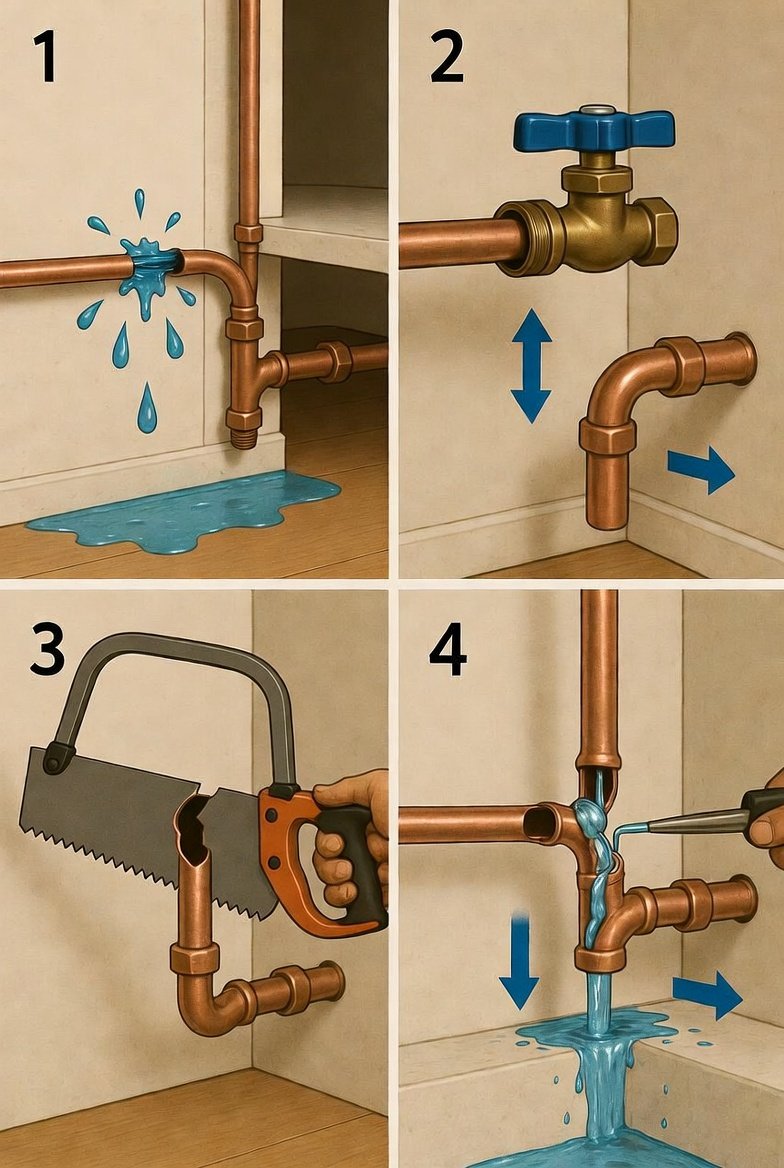
Temporary Fixes That Actually Buy You Time
Temporary fixes are meant to hold the line, not solve the problem.
Temporary fixes buy time — they are not structural repairs.
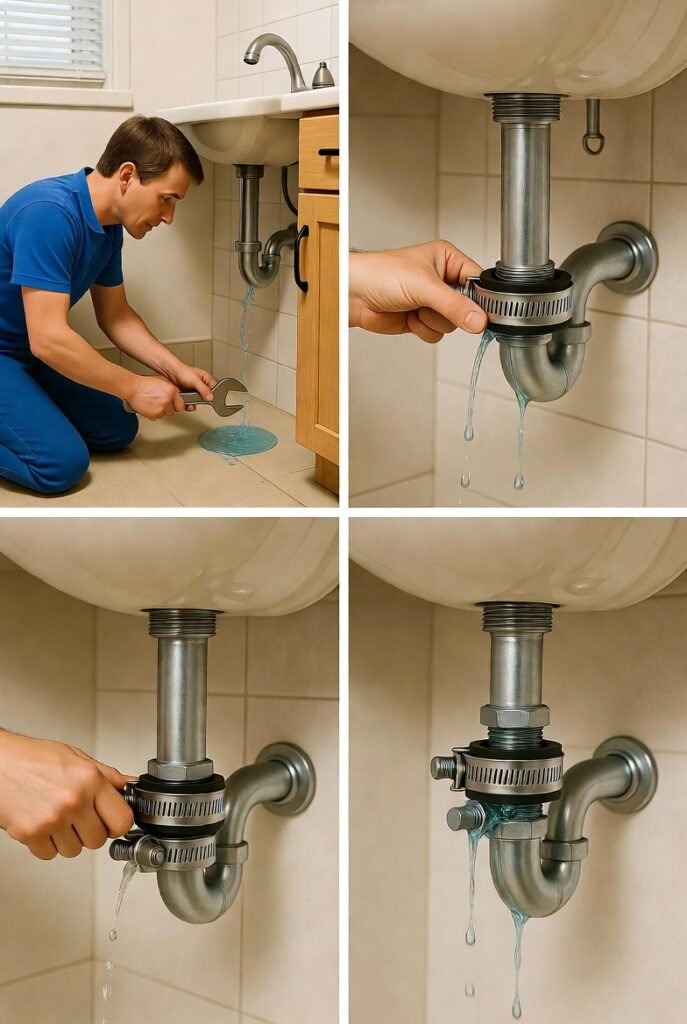
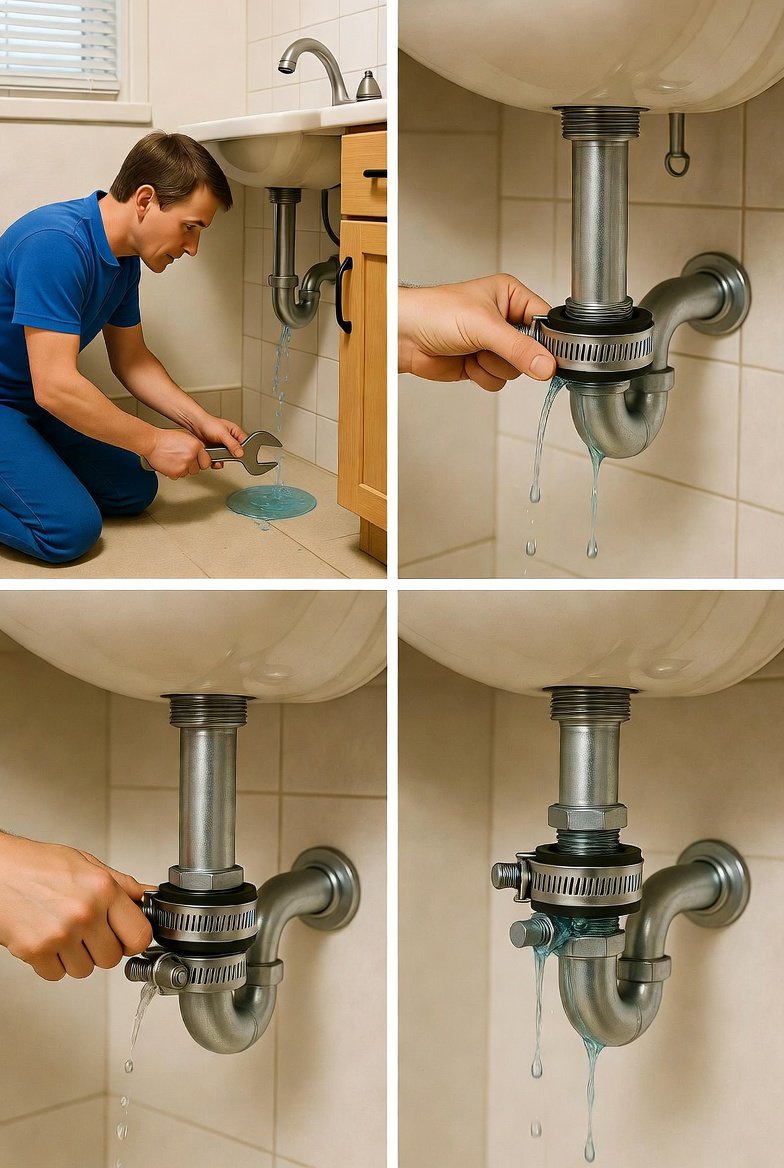
Best Short-Term Fix: Rubber Patch + Clamp
Works well for small pipe splits or pinholes.
- Shut off water
- Relieve pressure
- Dry the pipe
- Place rubber over the leak
- Tighten the clamp firmly
- Water leak in house
Old garden hose rubber works surprisingly well.
Self-Fusing Silicone Tape
Best for minor leaks under light pressure.
Wrap tightly with overlapping passes — it bonds to itself.
Epoxy Putty
Works when:
- water is OFF
- surface is dry
- pipe is prepped
Not ideal for active pressurized leaks.
Avoid Overtrusting Duct Tape
It can slow drips briefly.
It is not a repair strategy.
Leaks That Are NOT DIY Situations
Do not attempt temporary fixes if:
- a pipe is split open
- water is spraying
- the ceiling is sagging
- the leak is near electrical wiring
- you cannot shut off water
- structural materials are collapsing
These are professional-level events.
Fast Fixture Stops by Location
Toilet Overflow
- shut off supply valve
- press flapper closed if tank overfills
- plunge carefully if needed
Under-Sink Leak
- shut off valves
- place a pan under the trap
- inspect flexible supply lines (common failure point)
Shower or Tub Leak
Dripping showerheads rarely qualify as emergencies.
Water appearing below the fixture does.
Stop using the fixture and call a plumber.
Washing Machine Leak
Turn valves off immediately.
Burst hoses release water fast.
Pull the machine out only if safe.
Drying Steps (Because Mold Runs on a Clock)
Stopping the leak is only halftime.
Drying prevents long-term damage.
Authoritative agencies repeat the same urgency:
- EPA — dry within 24–48 hours
- FEMA — mold can begin developing in that window
- CDC — clean and dry quickly after water exposure
Drying Priority Order
- Remove standing water
- Lift wet rugs
- Increase airflow (if power is safe)
- Run a dehumidifier
- Remove saturated porous materials
Hidden moisture is the reason homes smell “fine” today — and terrible next week.
Watch for Hidden Wet Zones
Moisture commonly hides:
- behind baseboards
- beneath cabinets
- under vinyl flooring
- inside wall cavities
When in doubt, involve a restoration professional.
When to Call for Help
Call a Plumber If:
- leak involves pipes or fixtures
- you had to shut off the main
- water appears inside walls or ceilings
Shutting off water and contacting a plumber is widely recommended when pipes are damaged.
👉Water Leak Detection Services)
Call Restoration If:
- drywall is soaked
- carpet padding is wet
- insulation absorbed water
- wood flooring swelled
Same-day drying is the safest move.
👉Water Damage Mitigation vs Restoration)
Call an Electrician If:
- water traveled through a ceiling fixture
- outlets sit inside the wet zone
- breakers trip
Never assume a circuit is safe just because lights still work.
Rapid Scenario Playbook
Burst Pipe
- shut off main
- open faucets briefly
- contain
- call plumber
- begin drying
Water Heater Leak
- close cold inlet
- shut breaker if electric
- call plumber
- call restoration if spread is significant
Basement Water
- avoid standing water if power risk exists
- shut off basement power if safe
- determine source
- call plumber for backups
- restoration for finished areas
👉 Basement Water Leak Repair Near Me)
Limitations (Straight Talk)
Temporary fixes are not permanent.
If you cannot confirm electrical safety — don’t experiment.
Drying targets vary by material, but the 24–48 hour window remains the most reliable urgency benchmark.
Handled early, most leaks stay repairable.
Delayed, they compound.
Act fast.
Quick Decision Matrix
Best first move: shut off water and protect electricity
Best temporary fix: rubber patch + clamp
Best prevention: dry within 24–48 hours