
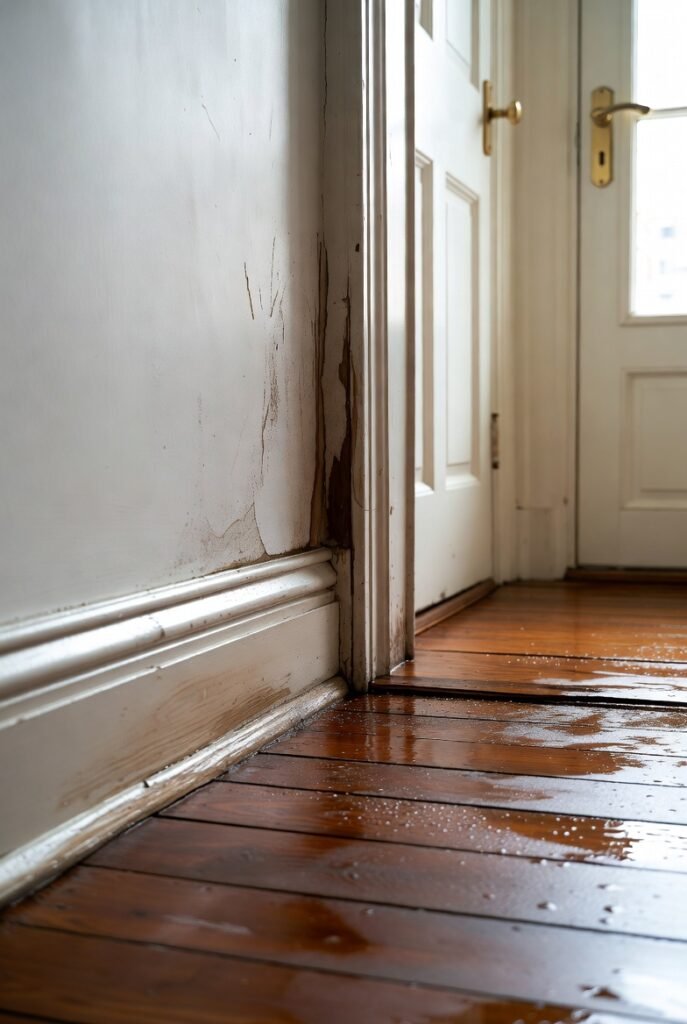
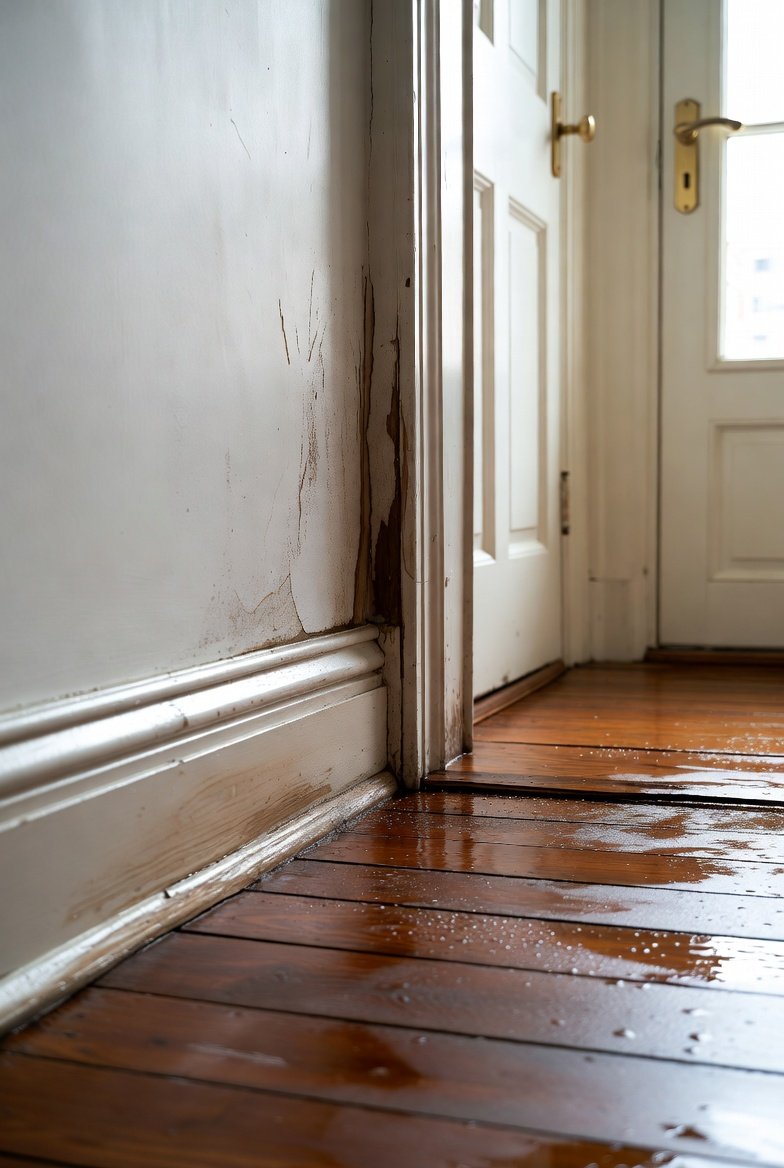
Signs of a Water Leak
Leaks rarely announce themselves — they reveal themselves.
A faint stain.
A soft spot.
A smell you can’t place.
Most serious water damage begins quietly, long before a drip appears.
Water travels behind drywall, beneath flooring, and through insulation. By the time it becomes visible, it has often been moving for days — sometimes weeks.
This page is built to help you detect leaks early using professional-style observation:
- high-confidence warning signs
- room-by-room clues
- simple confirmation tests
- escalation rules
Because early detection turns major repairs into minor ones.
Think You Might Have a Leak? Check These First (Fast Detection Box)
Look for these high-signal clues:
- Water meter moving when everything is off
- New stain that slowly spreads
- Persistent musty smell
- Sudden drop in water pressure
- Warm or damp flooring
If you notice two or more, treat it as an active leak until proven otherwise.
The Most Reliable Leak Indicators (Highest Confidence)
Not all signs carry equal weight. Some strongly suggest active water movement.
Top-Tier Indicators
- Water meter movement with fixtures off
- Moisture that spreads instead of drying
- Sound of running or hissing water
- Unexpected pressure drop
Plumbers often trust the meter before opening a wall — because it reveals flow you cannot see.
Start With the Water Meter Test (Closest Thing to Proof)
If you only perform one check, make it this one.
How to Do It
- Turn off all fixtures and appliances that use water.
- Wait 10–15 minutes.
- Recheck the meter.
If it moved, water is flowing somewhere.
That alone is enough reason to escalate.
👉Water Leak Detection Services)
Whole-Home Signs (When the Leak Is Hidden)
These clues suggest water may be traveling where you can’t see it.
- unexplained spike in water bill
- humidity higher in one area
- musty odor that keeps returning
- recurring mold spots
- pests attracted to one zone
- hot water running out faster
- new cracking paired with moisture clues
- faint running-water sounds
Individually, these may seem harmless.
Together, they form a pattern.
And patterns matter more than any single symptom.
Signs of a Water Leak in the Ceiling
Ceiling leaks deserve faster attention because they combine weight risk and electrical risk.
Reliable Ceiling Clues
- yellow or brown stains expanding outward
- stains darkening after showers or rain
- bubbling or peeling paint
- soft drywall texture
- visible sagging or bulging
- drips from vents, detectors, or fixtures
- musty insulation smell
- water lines forming along seams
If moisture is near lighting or wiring, treat it as a safety issue first.
Pattern Recognition Helps Identify the Source
- Appears after rain → likely roof or exterior intrusion
- Appears after plumbing use → likely pipe above
- Near HVAC zones → possible condensate overflow
Professionals often diagnose leaks by timing before opening structures.
Signs of a Water Leak in the Wall
Wall leaks often stay hidden longer — which allows damage to spread further.
Common Wall Indicators
- localized bubbling paint
- soft or “puffy” drywall
- swelling baseboards
- damp carpet edges
- dark staining near showers
- mildew smell in one section
- dampness that follows plumbing use
- rain-linked moisture near exterior walls
- chalky mineral residue (efflorescence)
- rust or pinhole spray marks on exposed pipes
If an outlet sits inside the damp zone, prioritize electrical safety.
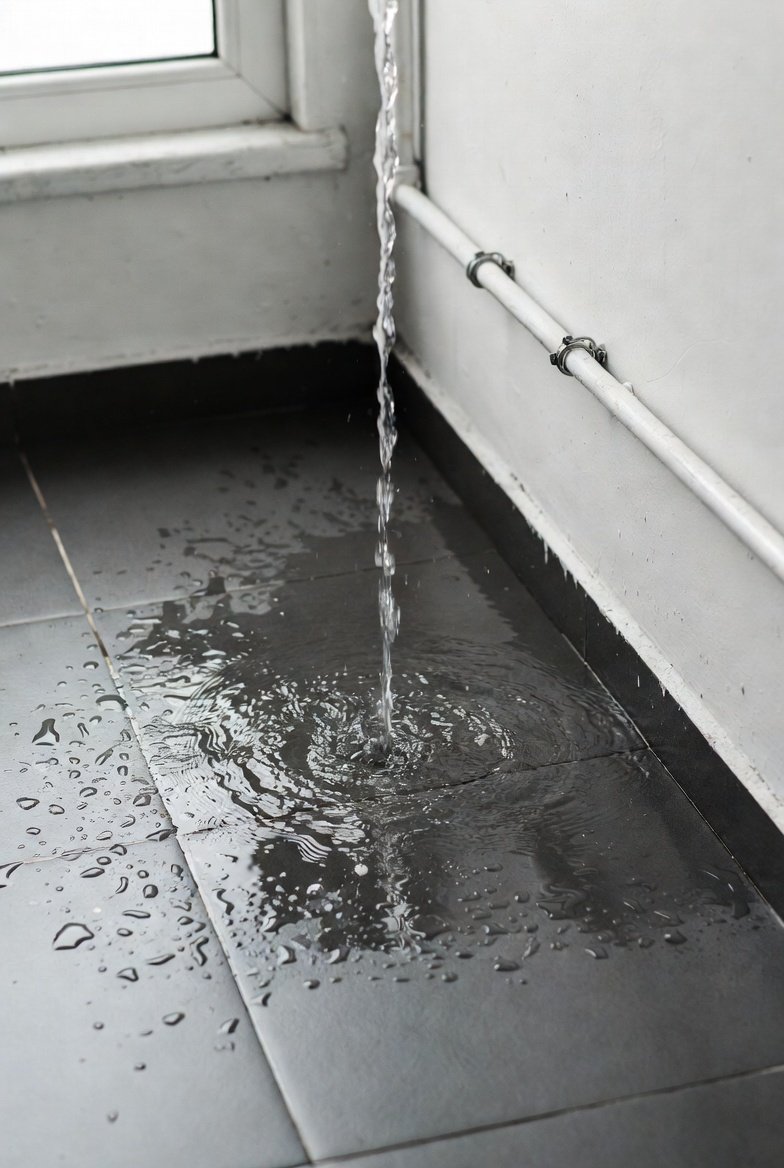
Signs of an Underground Water Leak
Underground leaks often surface late — after substantial water loss.
Service-line failures can waste thousands of gallons before becoming visible.
Yard Clues
- soggy patch during dry weather
- unusually green strip of grass
- soft or shifting soil
- bubbling water
- pooling near the meter
- small sinkholes
Slab or Under-Floor Clues
- warm spot on flooring
- damp seams
- musty odor rising from floors
- running-water sounds when fixtures are off
- intermittent pressure drops
- mold appearing at baseboards
Underground leaks rarely fix themselves.
They typically grow.
Problems That Can Mimic a Leak
Not every moisture event is plumbing failure.
Look for these common imposters:
- HVAC condensation
- high indoor humidity
- heavy shower steam
- window condensation
- minor foundation sweating
Patterns usually separate condensation from leaks.
If moisture appears only during temperature swings — not plumbing use — investigate airflow and humidity first.
Simple Confirmation Tests (No Tools Needed)
1. Meter Test — Best Overall
Already covered — and still the most reliable.
2. Pattern Tracking
Ask:
- only after rain?
- only after showers?
- overnight?
Timing often reveals category before tools are used.
3. Tissue Test
Wrap dry tissue around a suspect joint.
Damp tissue = active seepage.
4. Cabinet and Vanity Check
Look for:
- warping
- mildew smell
- damp surfaces
Small cabinet leaks often become large structural ones.
What to Do Next (Escalation Rules)
If You Suspect Active Flow
- shut off the nearest valve
- document quickly
- call a plumber
Emergency guidance commonly recommends turning off water and contacting a plumber when pipes are damaged.
If Porous Materials Are Wet
Speed matters now.
Federal agencies consistently advise drying wet materials within 24–48 hours to reduce mold risk.
- EPA — dry within that window whenever possible
- FEMA — mold can begin developing quickly
- CDC — clean and dry promptly after water exposure
If drywall or carpet padding is saturated, early mitigation is often the safer path.
👉 Water Damage Mitigation vs Restoration)
Who to Call Based on the Signs
- Plumber: pipes, fixtures, hidden supply lines
- Restoration: soaked drywall, insulation, flooring
- Roofer/exterior: rain-linked symptoms
- Electrician: moisture near wiring
- Basement water leak
Correct routing reduces damage spread.
Limitations (Practical Reality)
You can confirm moisture without always confirming the source.
Some leaks require tools — sometimes multiple trades.
Drying timelines vary by material, but the 24–48 hour window remains the most reliable urgency benchmark.
Handled early, most leaks stay manageable.
Ignored, they compound.
Quick Decision Matrix
Best overall rule: if the meter moves, treat it as active.
Best ceiling rule: water near fixtures = prioritize electrical safety.
Best prevention: detect early and dry quickly.
Early detection turns major repairs into minor ones.