
Water Leak in House: Who to Call
The 5-Second Answer (Start Here)
If water is actively leaking, hesitation causes damage.
Use this fast routing rule:
- Active water from a pipe, valve, or appliance → Call a plumber
- Wet drywall, carpet, insulation, or standing water → Call restoration
- Water near outlets, wiring, or fixtures → Call an electrician (power off first)
- Leak outside near the street or meter → Call your water utility
Stop the water first. Dry second. Repair third.
Everything else is secondary.
Immediate Safety Boundary (Read Before Moving)
Treat every indoor leak as if electricity is involved until proven otherwise.
Leave the area and call for help immediately if you notice:
- buzzing sounds
- burning smells
- sparking outlets
- submerged cords
- water approaching the breaker panel
Do NOT touch outlets, extension cords, or the panel if wet.
If you can safely shut off power without stepping into water, do it.
If not — evacuate and call emergency services.
If a ceiling is bulging or sagging, do not stand underneath it. Collapse is possible.
Safety always outranks property.
👉 Water Leak Emergency — 10-Minute Response Plan)
The Mold Clock Starts Earlier Than Most People Think
Federal housing guidance consistently notes that drying wet materials within 24–48 hours significantly reduces mold risk.
Real-world translation:
Drywall and carpet padding are rarely “watch-and-wait” materials.
If they’re soaked, speed matters more than perfection.
Why Calling the Wrong Pro Costs Hours (Sometimes Thousands)
Many homeowners lose critical time here.
- A plumber usually won’t dry the structure.
- A restoration crew won’t repair the pipe.
- An electrician won’t stop the water.
Misrouting delays damage control — and water spreads while trucks are being redirected.
Correct routing is not convenience.
It is structural protection.
The Routing Table (Use This When Seconds Matter)
What You See → Who to Call First
What you notice | Likely cause | First call |
Water spraying or dripping from pipe | Plumbing failure | Plumber |
Wet ceiling below bathroom/kitchen | Plumbing above | Plumber |
Ceiling leak after rain | Roof intrusion | Roofer |
Water through ceiling light / breakers trip | Electrical hazard | Electrician + stop source |
Standing water / soaked drywall | Structural saturation | Restoration |
Water pooling near street or meter | Utility-side leak | Water utility |
Keep this rule simple:
Flow problem → plumber.
Material problem → restoration.
Call a Plumber If It’s Likely Plumbing Water
Plumbers stop the source — which is always priority number one.
Plumber Triggers
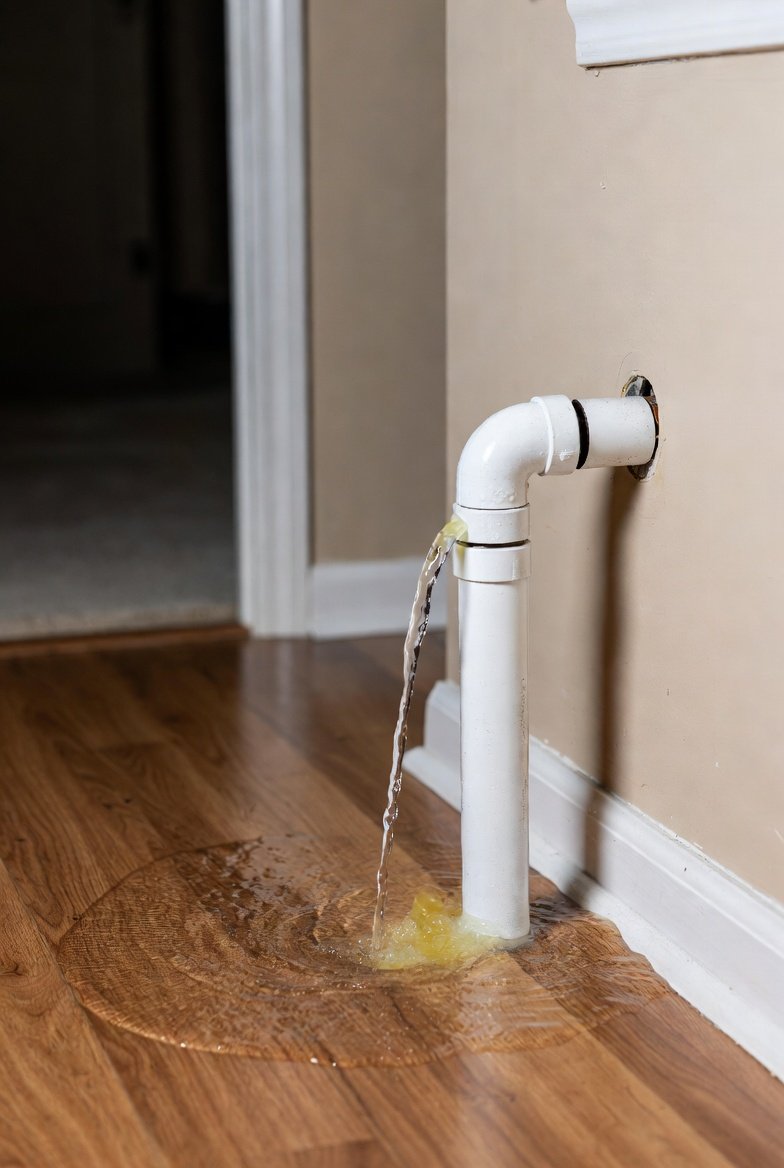
- active leak from pipe, valve, or supply line
- leaking toilet, sink, dishwasher, washer, or fridge line
- water heater failure
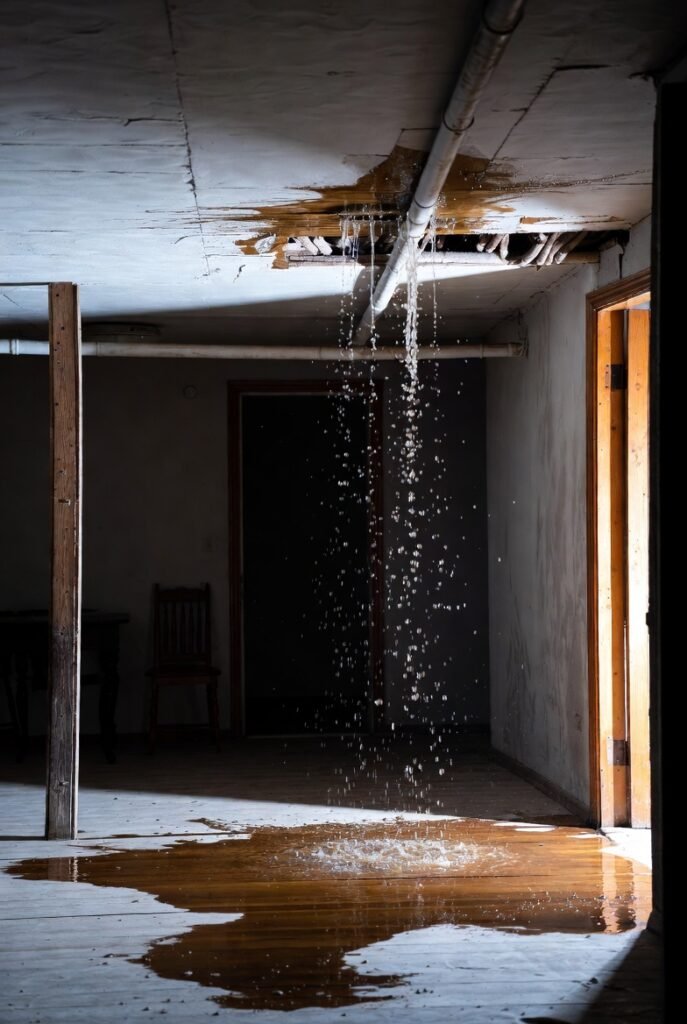
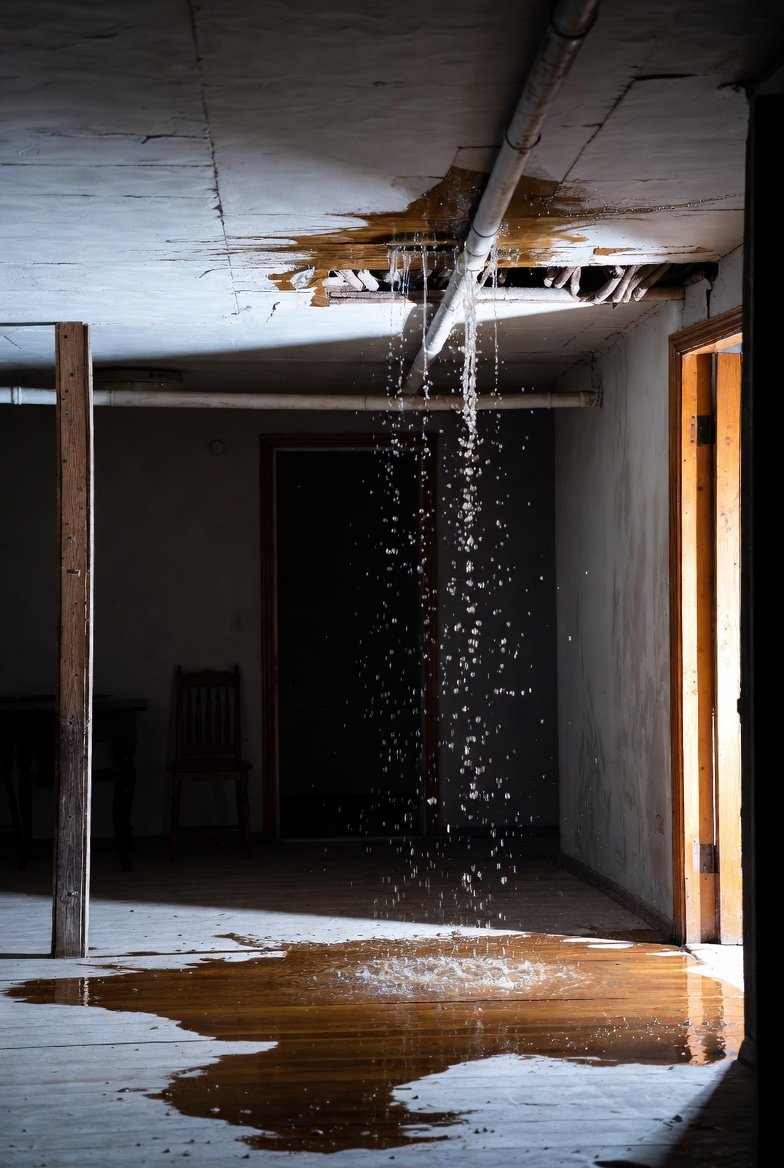
- wet ceiling directly below kitchens or bathrooms
- leak worsens when water runs
- hissing or running sounds inside a wall
Emergency preparedness guidance commonly advises shutting off incoming water at the main valve and calling a plumber when pipes are damaged.
👉 Water Leak Detection Services)
Call a Water Damage Restoration Company If Materials Are Wet
Drying is a race against time — not a cosmetic step.
Restoration Triggers
- standing water
- soaked carpet or padding
- sagging drywall
- wet insulation
- swelling baseboards
- basement water leak
- warping wood floors
- musty odor
Public safety agencies consistently emphasize rapid extraction and drying to reduce secondary damage.
If porous materials are saturated, same-day drying is the safe move.
👉 Water Damage Mitigation vs Restoration)
Call an Electrician If Water Is Anywhere Near Wiring
Never assume a circuit is safe just because lights still work.
Electrician Triggers
- water dripping through a ceiling light
- outlets inside a wet wall
- breakers tripping after the leak
- damp switch plates
- suspected wet wiring
Turn power off first if it can be done safely.
You may still need a plumber to stop the source — but electrical safety always comes first.
Call Your Water Utility If the Leak Might Be on the City Side
Most homeowners wait too long to make this call.
Utility Triggers
- water bubbling near the street
- pooling around the meter box
- sudden ground saturation outside
- neighbors reporting a main break
In many municipalities, homeowners are responsible for the pipe from the house to the meter — while utilities typically handle the street side.
Reporting early prevents larger infrastructure damage.
Who to Call for a Water Leak in the Ceiling
Ceiling leaks combine collapse risk and electrical risk — which is why they demand faster decisions.
First: Identify the Pattern
- Happens during rain → roof intrusion
- Happens during plumbing use → plumbing above
- Near HVAC → condensate issue
Ceiling Decision Rule
Situation | First call |
After rain | Roofer |
Below bathroom/kitchen | Plumber |
Near light fixture | Electrician (power off) |
Bulging drywall | Restoration |
👉 Ceiling Water Leak Repair Near Me)
Who to Call for a Water Leak in the Wall
Wall leaks are often slower — and more destructive — because they hide.
Common Causes
- pinhole supply leaks
- shower plumbing failures
- exterior intrusion
- drain leaks
- HVAC condensation
Wall Decision Rule
Situation | First call |
Worse when fixtures run | Plumber |
Musty smell / soaked drywall | Restoration |
Only after storms | Roofer |
Outlet in wet zone | Electrician |
👉 (Internal link: Water Leak in Wall — Signs + Source)
Before You Call: 3 Moves That Reduce Damage Immediately
- Treat electricity like it’s already involved
Avoid standing water and shut off power if safe. - Stop the water
Use the fixture valve first — escalate to the main if necessary.
👉 Main Water Shutoff Valve — Where It Is + How to Turn It Off)
- Take fast photos — then act
Documentation matters, but containment matters more.
What to Say on the Phone (So You Get the Right Dispatch)
If Calling a Plumber
- Is the leak active?
- Where is it located?
- Is the water shut off?
- Does it worsen during use?
If Calling Restoration
- What materials are wet?
- How long have they been wet?
- Any standing water?
- Do you verify dryness with moisture meters?
If Calling an Electrician
- Is water near fixtures or outlets?
- Are breakers tripping?
- Is power off?
If Calling the Utility
- Leak appears near street or meter
- Unsure if it’s homeowner responsibility
Clarity speeds dispatch.
Limitations (But Useful Ones)
Remote guidance cannot confirm the source without seeing the home.
Some leaks require multiple trades:
plumber to stop → restoration to dry.
The 24–48 hour drying window remains the most reliable urgency benchmark for preventing mold.
Quick Decision Matrix
Best overall move: protect electricity → stop water → call correctly.
Best for wet ceilings/walls: involve restoration early.
Best for outside leaks: notify the utility immediately.
Handled early, many leaks stay manageable.
Delayed, they compound.
Act fast — and route correctly.