
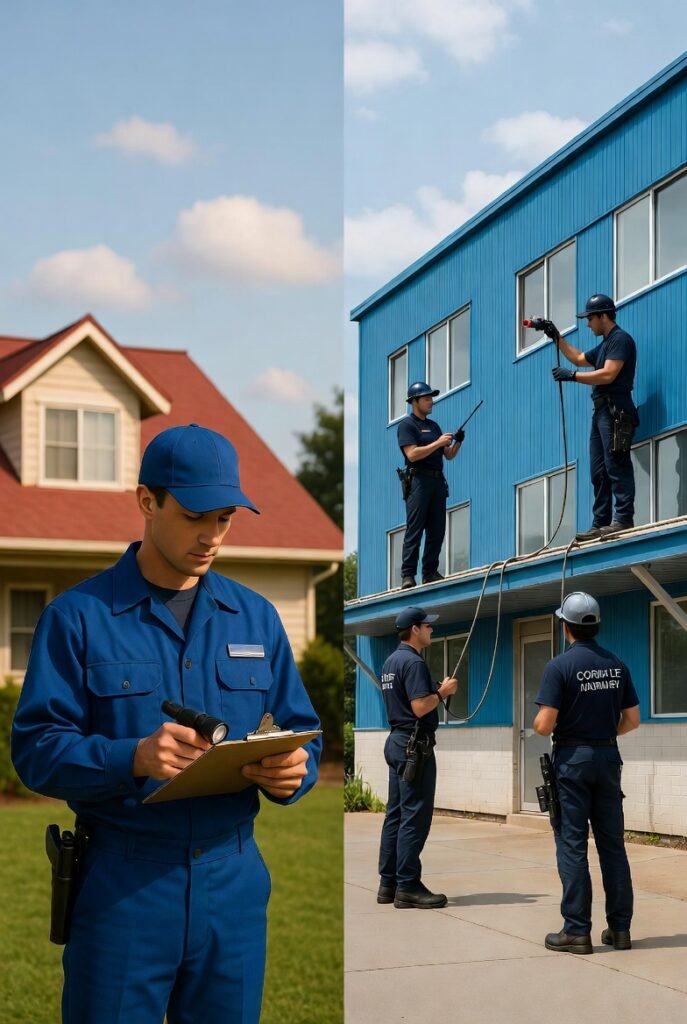

Leak Detection Companies: How to Choose the Right One
Not every leak detection company solves the same problem.
Some focus on plumbing systems inside homes. Others specialize in underground infrastructure, sewer camera inspection, pools, commercial piping, or even gas safety.
Choosing the wrong category can delay repairs, expand damage, and sometimes lead to unnecessary openings simply because the provider was diagnosing outside their specialty.
Before comparing companies, the first decision is understanding which type of leak professional your situation actually requires.
This guide helps you make that call with confidence.
Who Should You Call for Leak Detection?
Call a leak detection company that specializes in the system you suspect is failing. Plumbing leaks typically require water-focused diagnostic providers, sewer issues often call for camera inspection specialists, and gas concerns should always be handled by licensed gas professionals or utilities first.
Matching the provider to the leak category dramatically improves diagnostic accuracy.
Not All Leak Detection Companies Handle the Same Systems
The term leak detection is broader than most homeowners realize.
Providers often operate within specific diagnostic lanes:
- Water plumbing specialists — hidden supply lines, slab leaks, interior piping
- Sewer and drain experts — CCTV pipe inspections, line breaks, root intrusion
- Gas detection professionals — safety-driven diagnostics requiring licensed handling
- Pool leak specialists — structural vs plumbing isolation
- Underground infrastructure teams — long-run buried lines
- Commercial detection firms — large-scale systems and pressure zones
The earlier you identify the correct category, the less likely you are to pay for repeat diagnostics.
Many experienced technicians note that misclassification — calling the wrong specialist first — is one of the most common reasons leak investigations expand unnecessarily.
Quick Check — Is This the Right Guide for You?
This guide is for you if:
- You have signs of a hidden leak but no visible source
- You want to avoid exploratory openings
- Multiple provider types seem possible
- You prefer evidence over assumption
This guide is not for you if:
- The leak is fully visible and accessible
- A straightforward repair is already obvious
- You’re only searching for the lowest service call
- You want a local directory rather than a selection framework
(For plumbing-specific provider evaluation, see water leak detection companies.)
Start With the Situation — Then Call the Right Specialist
Situation | Who to Call First | Why |
Hidden water symptoms | Water leak detection specialist | Confirms and pinpoints before openings |
Visible plumbing failure | Plumber | Repair is the priority |
Saturated materials | Restoration company | Drying limits secondary damage |
Stains after storms | Roofer | Often intrusion, not plumbing |
Gas odor | Utility or licensed gas pro | Safety takes precedence |
When uncertainty exists, confirmation testing should happen before major repair work begins.
What Professional Leak Detection Should Deliver
Regardless of specialty, a structured diagnostic visit should aim to provide:
- Confirmation that a leak exists (or is ruled out)
- A narrowed search area
- A pinpoint location — or the smallest reasonable access zone
- Markings or documented findings
- Clear next-step guidance
If deliverables aren’t explained beforehand, comparisons become difficult.
The Leak Detection Company Scorecard
Use this as an objective filter when evaluating providers.
Criteria | Weak | Acceptable | Strong |
Confirmation workflow | “We’ll inspect” | Some testing | Confirm → narrow → pinpoint |
Method clarity | Vague | Basic mention | Tools explained with reasoning |
Damage strategy | Immediate cutting | Minimal planning | Targeted access only |
Scope definition | Unclear | Partial | Clearly defined |
Pricing transparency | Ambiguous | Some detail | Model + inclusions explained |
Documentation | None | Minimal | Markings/readings provided |
Scenario fit | Generic | General | Demonstrated specialization |
Consistency matters more than marketing volume.
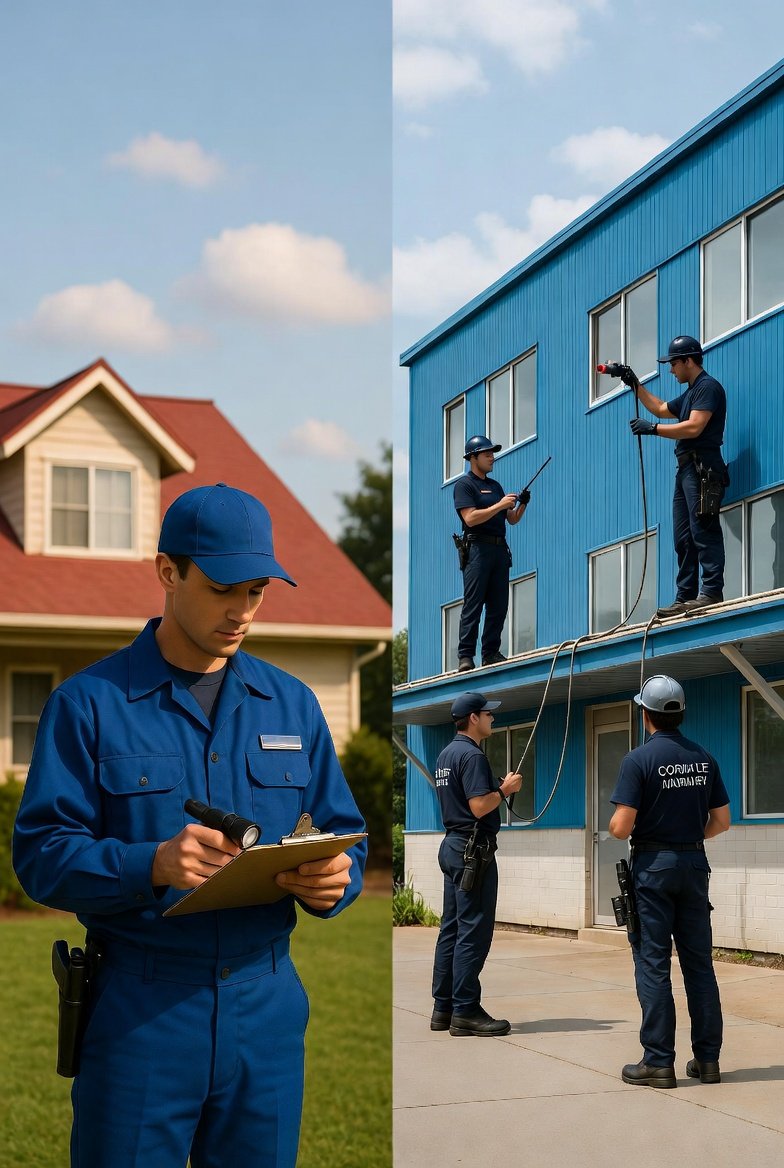
Tool Selection Should Follow Leak Type
Owning equipment is not the same as applying it correctly.
- Pressurized plumbing leaks: acoustic detection often excels
- Moisture patterns: thermal and mapping tools narrow zones
- Slab concerns: isolation and precision methods reduce guesswork
- Underground lines: tracing technologies help manage depth
- Drain issues: camera inspection identifies structural failures
When companies explain why a tool fits your scenario, it signals diagnostic maturity.
Questions That Quickly Reveal Operational Strength
Ask directly:
“Do you confirm the leak before recommending any opening?”
Structured workflows protect property.
“Which tools fit my situation — and why?”
Confidence should sound educational, not promotional.
“What will I receive at the end of the visit?”
Evidence matters.
“Is pricing flat or hourly, and what defines scope?”
Clarity prevents invoice surprises.
“Does the fee cover one source or multiple suspected areas?”
Scope is where misunderstandings often begin.
Transparent answers usually reflect disciplined operations.
When Leak Detection May Not Be Necessary
Specialized diagnostics are often unnecessary when:
- the leak source is clearly visible
- the failure point is accessible
- repair access is already open
- the issue points strongly to roof intrusion rather than plumbing
In those situations, starting with repair may be more efficient.
Risk Signals That Often Lead to Higher Costs
Watch for:
- demolition-first language
- inability to explain diagnostic sequence
- vague outcome descriptions
- undefined pricing scope
- pressure to approve repairs before pinpointing
Effective detection should reduce uncertainty — not expand it.
Edge Cases Worth Mentioning Early
Some scenarios require extra diagnostic discipline:
Intermittent leaks may demand repeatable testing.
Shared plumbing lines can complicate isolation.
Pools, slabs, and underground systems punish incorrect assumptions.
Gas concerns should always be treated as safety-first events.
Proactive disclosure helps providers plan accurately.
A Simple Call Script
“I’m seeing signs of a hidden leak but don’t know the source. Do you provide diagnostic detection, confirm leaks before openings, explain which tools you’ll use, define pricing scope clearly, and document findings?”
Clarity on the first call often predicts the quality of the visit.
What You Should Leave the Visit With
Before approving payment, you should understand:
- whether the leak is confirmed
- where the search area has been narrowed
- the pinpoint location or access zone
- documented notes or markings
- the recommended repair direction
Precision is the outcome you’re hiring for.
The Bottom Line
Leak detection companies are not interchangeable.
Choosing the provider aligned with your specific system is what turns diagnostics into targeted repair — and prevents the costly cycle of opening, guessing, and reopening.
Start by identifying the category, use the scorecard to evaluate discipline, and choose the team that replaces uncertainty with measurable evidence.
For plumbing-focused selection guidance, see water leak detection companies.
To understand diagnostic workflows, visit water leak detection services.
For pricing expectations, review water leak detection cost.