

Water Leak Detection Near Me: How to Hire the Right Local Pro
Hidden leaks rarely wait for convenient appointment windows.
Water can spread quietly behind walls, beneath flooring, or through structural cavities while homeowners debate who to call — which is why choosing the right local provider quickly matters more than most people realize.
When people search “water leak detection near me,” they are usually looking for one thing: a professional who can arrive within a realistic window, confirm the leak, narrow the search, and pinpoint the source before the problem escalates.
Speed matters — but accuracy matters more.
What Does “Water Leak Detection Near Me” Really Mean?
It means hiring a nearby diagnostic professional capable of confirming a hidden leak, identifying the most likely source, and guiding targeted repair — not simply dispatching the closest technician available.
The best local providers combine response clarity with disciplined testing workflows.
Why Acting Quickly Can Limit Damage
Leaks rarely remain contained.
Moisture travels along framing, collects beneath surfaces, and often appears far from the original failure point. Delays allow materials to swell, odors to develop, and secondary damage to expand the repair scope.
Many technicians note that the largest repair invoices often follow situations where the leak was present for days — but the right diagnostic visit was postponed.
Early confirmation protects both the structure and the budget.
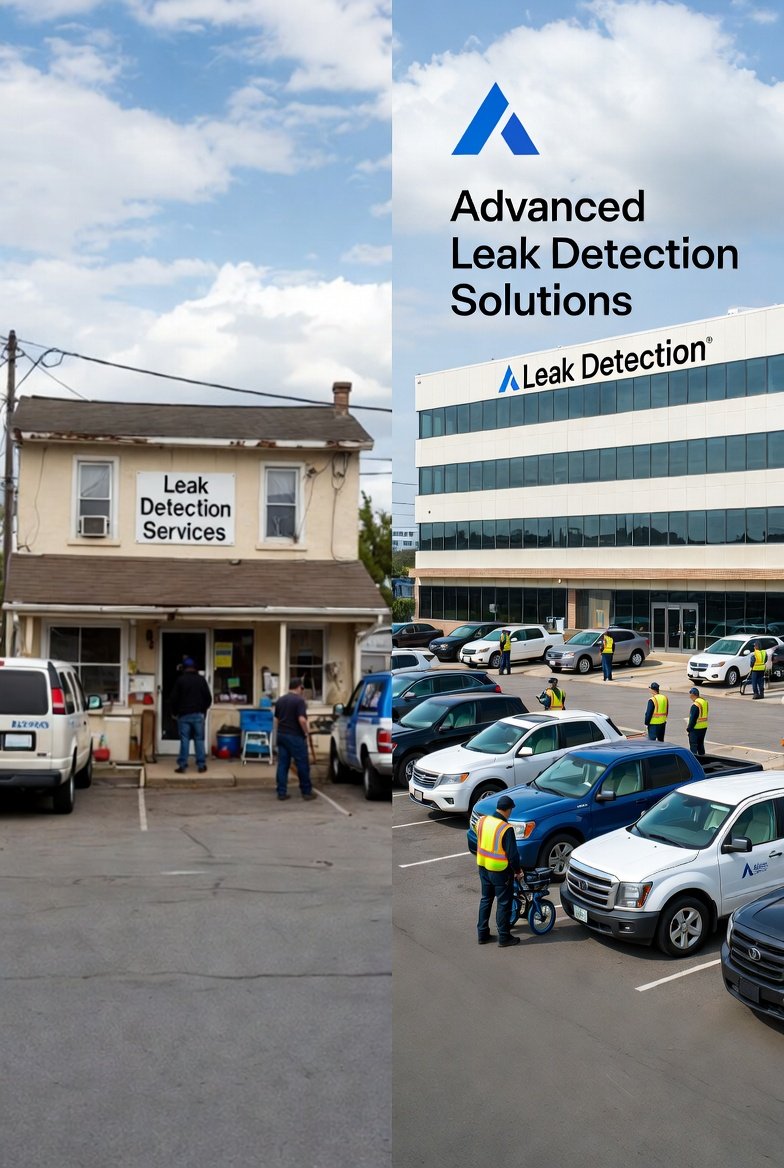
What “Local” Should Signal — Beyond Distance
“Near me” should indicate more than geographic proximity.
Look for a provider who can:
- offer a realistic arrival window
- explain their diagnostic process
- adapt methods to your scenario
- deliver a clear outcome you can repair
The closest company is not always the most prepared.
Before You Call — A 5-Minute Preparation That Helps the Visit
A small amount of preparation can improve diagnostic efficiency.
- Locate your main water shutoff
- Photograph visible symptoms
- Clear access to suspected areas
- Observe whether your meter moves when fixtures are off
- Note when symptoms began and what seems to trigger them
If water is actively spreading, shutting off the supply should take priority.
Technicians frequently mention that prepared homes allow them to narrow the problem faster.
When It’s Time to Call Local Leak Detection
Consider scheduling a visit when:
- leak symptoms are present but the source isn’t visible
- moisture or staining is expanding
- water bills rise unexpectedly
- you hear water movement with no fixtures running
- previous repairs didn’t resolve the issue
If the leak is fully visible and accessible, a standard plumbing repair may be the more direct path.
Understanding Local Response Windows
Response time varies based on demand, staffing, and urgency.
Typical patterns include:
Emergency dispatch: sometimes available the same day, often at premium rates.
Scheduled diagnostics: common for non-flood conditions.
After-hours visits: possible in many markets but usually priced higher.
When booking, ask:
- “What is your earliest diagnostic window?”
- “Is this considered emergency service?”
- “Does after-hours service change pricing or scope?”
Clear expectations reduce stress during an already disruptive situation.
What Happens During a Local Leak Detection Visit
Most structured appointments follow a disciplined progression:
- Symptom review
- Confirmation testing
- Water leak test
- Isolation and narrowing
- Precision pinpointing
- Location marking
- Repair guidance
Skipping these steps often increases property risk.
Tools Local Professionals Commonly Use
Experienced providers select tools based on leak behavior.
- Acoustic detection: listens for pressurized leak vibrations
- Thermal imaging: highlights temperature patterns linked to moisture
- Moisture mapping: confirms spread and narrows zones
- Pressure testing: verifies system integrity
- Tracer gas: assists with difficult-to-locate leaks
When technicians explain why a method fits your scenario, it usually reflects diagnostic discipline rather than guesswork.
Why Local Quotes Can Differ
Several localized factors influence pricing:
Local Factor | What Changes | Why It Matters |
Emergency vs scheduled | Dispatch fees | Rapid response requires flexible staffing |
After-hours timing | Premium rates | Availability is limited |
Hard surfaces | Diagnostic complexity | Tile and concrete reduce access |
Multiple suspected zones | Scope | Broader testing takes longer |
Intermittent leaks | Time | Harder to confirm |
Advanced methods | Equipment use | Precision tools raise costs |
Detection is typically a diagnostic fee separate from repair.
A Quick Local-Hire Scorecard
Use this to identify operational strength quickly.
Criteria | Weak | Acceptable | Strong |
Confirmation workflow | “We’ll inspect” | Some testing | Confirm → narrow → pinpoint |
Response clarity | Vague | Some detail | Defined arrival window |
Method fit | Generic | Basic | Scenario-matched |
Damage approach | Immediate cutting | Minimal planning | Targeted access only |
Scope definition | Unclear | Partial | Clearly explained |
Documentation | None | Minimal | Evidence provided |
Strong providers tend to show consistency across categories.
Questions Worth Asking Before Booking
“Do you confirm the leak before recommending any opening?”
“What tools fit my situation — and why?”
“What will I receive at the end of the visit?”
“Is pricing flat-rate or hourly, and what defines scope?”
“Does the fee cover one suspected source or multiple areas?”
“Is repair separate, and are any fees credited?”
Transparent answers often indicate structured operations.
Warning Signs That Should Slow You Down
Be cautious if a provider:
- recommends cutting before confirmation
- struggles to explain methods
- offers vague outcomes
- shifts pricing without defined scope
- signs of a water leak
Effective diagnostics reduce uncertainty — they don’t create more of it.
Situations Local Pros Should Navigate Well
Some cases demand additional diagnostic patience:
- intermittent leaks
- shared plumbing lines
- slab leak detection near me
- properties with layered renovations
Gas concerns should always be treated as safety-first events requiring licensed professionals.
What You Should Leave the Visit With
Before approving payment, you should understand:
- whether a leak is confirmed
- where the search has been narrowed
- the pinpoint location or tight access zone
- documented notes or markings
- the recommended repair direction
Precision is the service you’re hiring.
The Bottom Line
Local leak detection is the step that replaces assumption with evidence.
When the source isn’t visible, choosing a nearby provider who balances response speed with diagnostic discipline helps keep repairs controlled — and prevents unnecessary openings.
To understand the diagnostic process in depth, see water leak detection services.
For pricing expectations, visit water leak detection cost.
For provider comparison guidance, review water leak detection companies.