
Water Leak Repair: What It Really Includes — DIY Limits & When to Call a Pro
Most people think water leak repair means tightening a fitting or swapping a pipe.
That’s incomplete.
A true repair has two separate obligations:
- Stabilize the plumbing system (stop the source permanently)
- Stabilize the structure and materials (dry, verify, restore)
If you only fix the pipe but leave wet insulation, drywall, framing, or subfloor in place, the damage continues silently.
Repair is not “drip stopped.”
Repair is “system stable + materials dry + no recurrence risk.”
This guide explains what water leak repair really includes, where DIY is safe, when professional involvement is necessary, realistic costs, timelines, and how to confirm the repair is actually complete.
What “Water Leak Repair” Actually Means
Water leak repair is not one task.
It changes based on spread, duration, and containment.
Tier 1 — Contained Leak (Source Fix Only)
Examples:
- Dripping shutoff valve
• Visible compression fitting leak
• Appliance supply hose split
• Clearly visible pinhole drip
Repair includes:
- Shut off water
• Replace failed component
• Pressure test
• Dry accessible surfaces
• Recheck under load
DIY is realistic here.
This is the only tier where “replace the part” often equals completion.
Tier 2 — Hidden Leak (Source + Access + Drying)
Examples:
- Leak inside drywall cavity
• Ceiling drip from upstairs bathroom
• Drain seep under tub
• Stain with concealed origin
Repair includes:
- Confirm active vs residual leak
• Open access (wall/ceiling)
• Correct plumbing/drain failure
• Remove wet insulation
• Dry cavity
• Verify dryness before closing
If you haven’t confirmed active movement yet:
This is where many homeowners stop too early.
Tier 3 — Structural or Multi-Area Leak
Examples:
- Slab leak
• Burst pipe saturation
• Long-running concealed leak
• HVAC condensate overflow soaking insulation
• Electrical exposure
Repair includes:
- Professional detection
• Moisture mapping
• Controlled containment
• Industrial drying
• Material removal
• Rebuild
DIY attempts here usually multiply cost.
Who Repairs What? (Trade Separation Logic)
Leak Origin | Source Trade | Material Restoration | Common Mistake
Supply pipe | Plumber | Restoration if wet | Assuming plumber dries cavities
Drain leak | Plumber | Restoration | Drain leaks hide in insulation
Roof penetration | Roofer | Restoration | Fix roof, ignore interior moisture
HVAC condensate | HVAC tech | Restoration | Clearing drain but not drying ceiling
Slab leak | Leak detection + plumber | Restoration | Fixing pipe, ignoring floor moisture
If you are still locating the origin:
how-to-find-a-water-leak-in-your-house
Stopping water flow ≠ restoring materials.
DIY vs Professional Boundaries
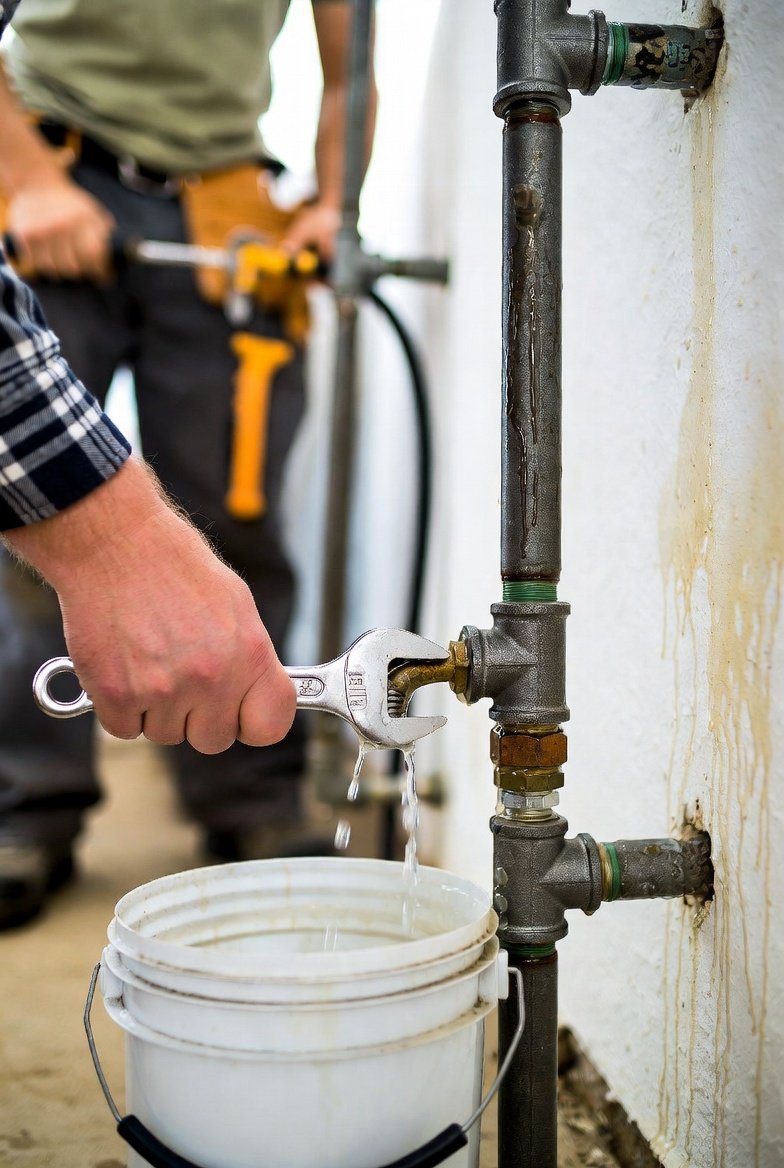
DIY-Safe
- Replace visible supply hoses
• Swap shutoff valves (with main off)
• Replace P-trap
• Replace exposed compression fitting
Borderline DIY
- Toilet wax ring
• Tub overflow gasket
• Dishwasher inlet line with tight access
Professional Required
- Leak behind drywall
• Ceiling with wet insulation
• Slab leak
• Electrical involvement
• Sagging drywall
• Multi-room spread
Ceiling-related leaks:
⚠ Electrical Rule (Non-Negotiable)
If water contacts:
- Light fixtures
• Ceiling fans
• Junction boxes
• Outlets
• Breaker panel walls
Turn power off immediately.
Water in electrical cavities escalates risk from water damage to fire hazard.
Why Fixing the Pipe Isn’t the Same as Repairing the Leak
Water migrates.
It spreads through:
- Insulation
• Framing cavities
• Subfloor layers
• Ceiling joists
• Wall plates
Even after drip stops:
- Insulation retains moisture
• Drywall remains damp internally
• Wood stays above safe moisture threshold
• Fasteners corrode
Moisture left behind creates:
- Soft drywall
• Musty odor
• Stain ghosting
• Structural weakening
• Microbial growth risk
Repair requires moisture verification.
Post-Repair Verification Checklist (Completion Criteria)
A leak is truly repaired when:
✓ Water meter shows no unexplained movement
✓ System pressure holds stable
✓ No expanding stain edges
✓ Wood moisture is back to normal interior levels (often under ~15% for many interior framing conditions)
✓ Soaked insulation is removed and replaced
✓ No musty odor after 48 hours
✓ No sagging drywall
Verification prevents rework.
If unsure whether leak is active:
False-Completion Traps (Why Repairs Fail)
- Fixing pipe but skipping insulation removal
• Closing drywall before cavity is dry
• Painting over stains without primer
• Ignoring minor odor
• Assuming roof patch fixed interior moisture
These shortcuts create second repairs.
Repair Scope by Leak Type
Plumbing Supply Leak
- Isolate + repair
• Pressure test
• Access cut if concealed
• Dry cavity
• Patch + restore
Drain Leak
- Identify correct joint
• Replace seal/gasket
• Timed water test
• Open cavity if moisture migrated
Roof-Origin Leak
- Exterior correction
• Interior drying
• Replace damaged drywall
• Stain-block + repaint
HVAC Condensate Leak
- Clear drain line
• Inspect pan + float switch
• Confirm drainage during runtime
• Dry insulation if soaked
Slab Leak
- Locate hot/cold line
• Repair or reroute
• Restore flooring
• Dry subfloor layers
Risk Escalation Model
Small drip →
Hidden cavity saturation →
Insulation collapse →
Ceiling sag →
Electrical exposure →
Structural risk →
Full restoration scope
Speed limits damage spread.
Water Leak Repair Cost Ranges (Realistic Context)
Scenario | Common Cost Range
Visible fitting swap | $150–$500
Hidden wall leak + patch | $500–$2,500
Ceiling leak w/ wet insulation | $800–$3,500
Slab leak | $1,500–$6,000+
Multi-room spread | $3,000–$15,000
Cost depends on:
- Access difficulty
• Duration of leak
• Insulation involvement
• Drying equipment need
• Electrical inspection
• Texture matching
Cost page reference:
Timeline Expectations
Minor visible leak → same-day stabilization
Ceiling leak →
Day 0: source fix
Days 1–3: drying
Days 4–7: rebuild
Multi-room spread → 1–2+ weeks depending on drying + rebuild complexity
Drying time and joint compound curing extend schedule.
Insurance Reality (Sudden vs Gradual)
Insurance often covers:
- Sudden, accidental pipe bursts
• Unexpected roof penetration
Common exclusions:
- Long-term seepage
• Maintenance neglect
• Slow, undiscovered leaks
Documentation helps:
- Photos before removal
• Moisture readings
• Material damage evidence
Never discard damaged material before documentation.
When to Call Water Leak Repair Services
Call quickly if:
- You hear water when fixtures are off
• Ceiling is sagging
• Stain expands after repair
• Floors feel soft
• Origin unclear
• Electrical involvement
Service pathway:
Limitations of DIY
DIY cannot reliably:
- Map concealed moisture
• Confirm pressure stability under load
• Verify cavity dryness
• Assess electrical risk
• Prevent premature rebuild
DIY is only safe when the leak is fully visible and fully contained.
Prevention After Repair
- Replace braided hoses every ~5 years
• Monitor water pressure
• Flush HVAC condensate lines
• Inspect shutoff valves annually
• Use leak sensors in high-risk areas
FAQs
Who should I call for water leak repair?
If the source is plumbing (pipes, valves, drains), call a plumber. If water soaked drywall, insulation, floors, or multiple rooms, you may also need restoration help. Roof- and HVAC-origin leaks often require roofers or HVAC technicians to correct the source.
Is water leak repair different from water damage restoration?
Yes. Repair stops the leak source. Restoration focuses on drying, removing damaged materials, and rebuilding affected areas.
Can a plumber fix ceiling water damage?
A plumber can fix the plumbing source. Ceiling drying, insulation replacement, and finish restoration often require additional work beyond the plumbing repair.
How do I know the leak is fully repaired?
Look for stable pressure, no unexplained water meter movement, no recurring staining, safe moisture levels, and no musty odor after drying.
Is water leak repair covered by insurance?
Sudden, accidental leaks are often covered depending on your policy. Long-term seepage or maintenance-related leaks are commonly excluded.
Can I repair a leak without opening the wall or ceiling?
Only if the leak is fully visible and contained. If water entered a cavity or insulation, you usually need access to dry and verify.
What happens if I only fix the pipe and patch the ceiling?
Trapped moisture can continue damaging materials and may lead to repeat staining, sagging drywall, odor, or microbial growth risk—often requiring a second, bigger repair.