
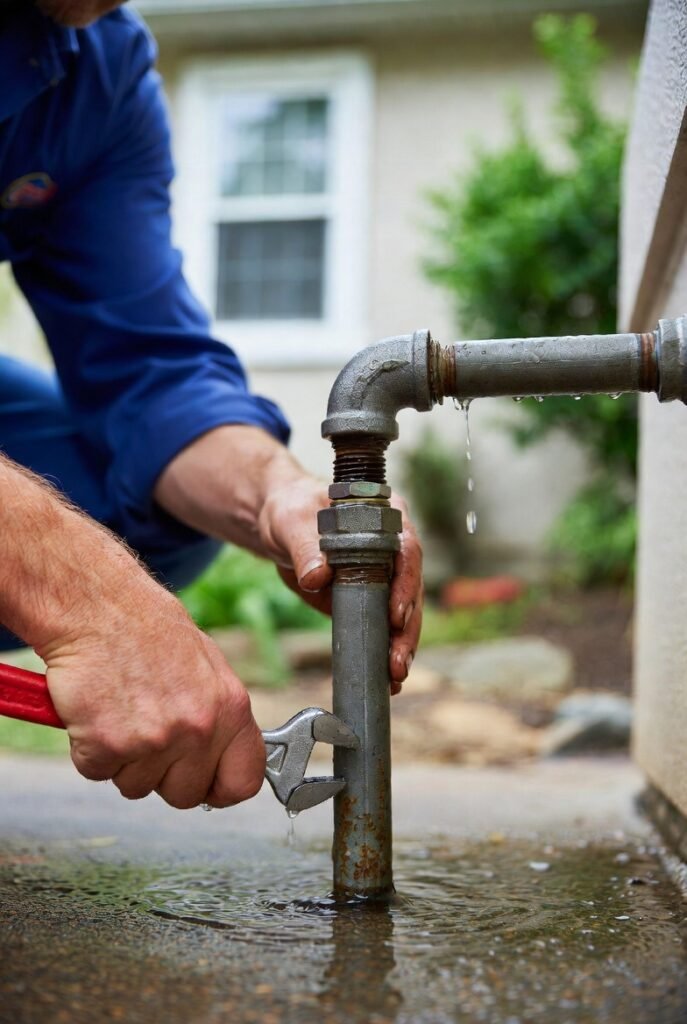
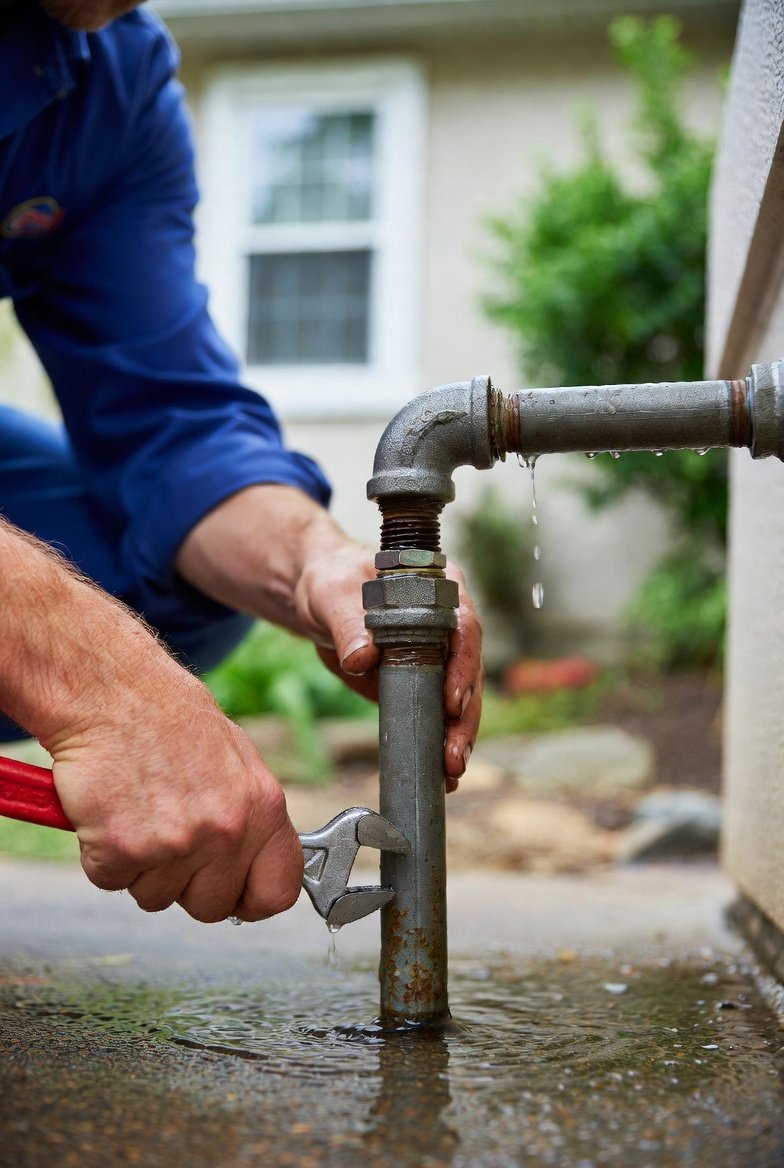
Water Leak Repair Near Me: How to Get It Fixed Fast (Without Overpaying)
When you search water leak repair near me, you’re trying to stop two things immediately:
- structural damage
• a repair decision that makes the problem worse
Speed matters — but process matters more. The goal is not just to stop the leak. The goal is to stop it once, avoid unnecessary demolition, and prevent the same issue from resurfacing weeks later.
The smartest approach follows a simple order:
control the water → reduce risk → diagnose correctly → repair → verify.
Homeowners who skip that sequence often pay the highest total repair cost.
60-Second Triage: Is This an Emergency?
Treat the situation as urgent if:
- Water is pouring or spreading rapidly
- Water is near outlets, breaker panels, or ceiling fixtures
- A ceiling is bulging or sagging
- You cannot stop flow at a fixture valve
- The water meter is spinning quickly with everything off
If any of these are happening, shut off the main water supply immediately and consider emergency water leak service.
If the leak is slow or contained, same-day or next-day repair is usually reasonable — but you still want to limit damage now.
What Is the First Thing You Should Do When You Find a Water Leak?
Shut off the water supply first — always.
Stopping the flow is the single fastest way to reduce structural damage, limit mold risk, and prevent detection costs from escalating while you decide the next step.
If the leak is isolated to one fixture, use the nearby shutoff valve.
If the source is unclear or water is spreading, turn off the main supply.
Many plumbing professionals note that the most expensive leak repairs often begin with delayed shutoffs rather than the leak itself.
How Fast Should a Plumber Arrive? (Realistic Expectations)
Arrival speed depends on severity, time of day, and local demand — but strong companies usually triage calls quickly.
Typical response patterns:
Active flooding: often prioritized within hours
Moderate leak: commonly same-day
Contained issue: next-day scheduling is normal
After-hours: available in many areas but typically higher cost
Ask this when booking:
“Given what I described, how urgent does this sound — and what arrival window can you realistically commit to?”
Clear answers usually signal an organized operation.
What to Do Right Now (Before Anyone Arrives)
Shut off the water
Use the fixture valve if possible; otherwise use the main.e
Reduce electrical risk
If water is near outlets or panels, shut power to that area only if it is safe.
Protect flooring and belongings
Move rugs, paper goods, and furniture away from moisture.
Document everything
Photos and short video clips help with insurance and future repair clarity.
Start drying early
Airflow with fans can significantly reduce secondary damage and odor.
Early action often matters more than people realize — moisture spreads quietly.
What “Near Me” Actually Means for Leak Repair
Local availability affects more than convenience. It often determines:
- response speed
- water leak emergency
- parts availability
- familiarity with regional pipe materials
- local code practices
You’re not looking for the closest ad — you’re looking for a plumber who shows up with a clear diagnostic mindset and defined scope.
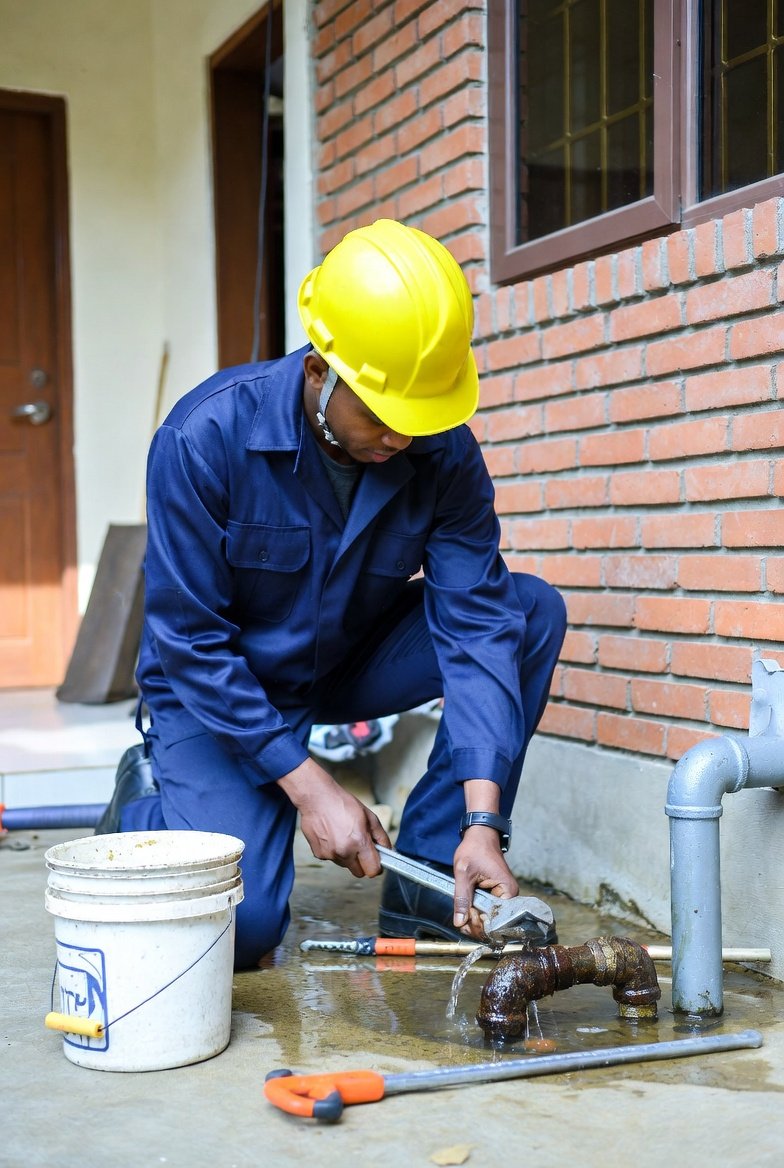
What Plumbers Typically Repair (Most Common Leak Sources)
Fixture and Supply-Line Failures
- Flexible supply lines
- Shutoff valves
- Faucet cartridges
- Toilet hardware
- water leak in house who to call
These are usually fast repairs when caught early.
Drain and Trap Leaks
- P-traps
- Cracked drains
- Loose slip joints
Often mistaken for larger problems but typically straightforward.
Water Heater Connections
- Inlet/outlet fittings
- Relief valve discharge issues
- Washer hoses
These can escalate quickly if ignored.
Pipe Leaks Behind Surfaces
- Pinhole copper leaks
- Failed joints
- Corrosion
- Freeze-related splits (region dependent)
Access — not the pipe — often drives cost here.
Main Service or Yard Lines
- Meter-to-house lines
- Irrigation leaks
These sit in a different pricing tier due to labor and location work.
Repair vs Leak Detection — Know When Proof Comes First
You usually don’t need detection when:
- the leak is visible
- dripping is clearly tied to one fitting
- access is already open
Detection becomes valuable when:
- water damage is present but the source isn’t visible
- you suspect a slab or underground leak
- symptoms returned after a prior repair
Professional detection commonly uses acoustic tools, thermal imaging, moisture mapping, pressure testing, and occasionally tracer gas to pinpoint hidden sources.
Decision rule:
If someone wants to start cutting before confirming the leak — pause.
What a Professional Repair Visit Should Look Like
A structured visit often follows this flow:
Assessment → shutoff → minimal access → repair → testing → explanation.
Testing is critical. Running fixtures, checking pressure, and visually confirming dryness ensures the repair actually solved the problem.
If a repair is completed but never tested, the job isn’t truly finished.
Local Pricing Drivers (Why Quotes Differ)
Price Driver | What Changes | Why It Matters |
Emergency timing | Higher service call | Rapid dispatch costs more |
Leak location | Labor time | Behind tile vs under sink |
Access difficulty | Labor + patching | Opening surfaces adds work |
Parts | Material cost | Valve and pipe type vary |
Pipe material | Complexity | Copper, PEX, galvanized differ |
Multiple leaks | Scope | One repair vs several |
Water damage | Separate trade | Dry-out may be needed |
Permits | Time | Some repairs require approval |
Cost Reality Check (What Many Homeowners Miss)
Two costs often exist:
- Plumbing repair — fixing the leak
2. Surface restoration — drywall, flooring, paint
Many plumbers fix the pipe but do not rebuild finishes.
Knowing this upfront prevents budget shock.
The Most Expensive Leak Repair Mistakes
Most high repair bills follow predictable patterns:
Waiting too long to shut off water
Damage spreads silently.
Skipping confirmation on hidden leaks
Guesswork leads to repeat openings.
Approving demolition before narrowing the source
Access becomes the cost driver.
Choosing purely on the lowest price
Inexperienced work often multiplies total expense.
Ignoring post-repair monitoring
Small residual leaks can linger.
Experienced plumbers often emphasize that prevention decisions — not pipe failures — create the biggest invoices.
Typical Repair Timeline (What to Expect)
While every situation differs, many repairs follow a rough timeline:
Minor fixture leak: often completed within hours
Behind-wall repair: commonly one day plus drying time
Main line repair: may extend across multiple days
Major saturation: drying alone can take several days before rebuild
The faster the leak is controlled, the shorter the timeline tends to be.
Red Flags That Signal Trouble
Avoid providers who:
- recommend cutting immediately without narrowing
- cannot explain their approach clearly
- signs of a water leak
- provide vague scope
- refuse post-repair testing
- change pricing mid-visit without explanation
Good repairs feel methodical — not rushed.
Questions to Ask Before Booking
- Is this a repair visit or diagnostic first?
- How do you confirm hidden leaks before opening surfaces?
- Is pricing flat-rate or hourly?
- What triggers additional charges?
- Will you test the repair before leaving?
- What is your minimum-opening approach?
- Do you handle drying or coordinate it?
- Can you provide a realistic arrival window?
Clear answers usually indicate operational maturity.
After the Repair: The Next 24–48 Hours
- Recheck the area for moisture
- Listen for water movement when fixtures are off
- Keep airflow moving if materials were wet
- Watch for odor or staining
Early follow-up catches rare but costly misses.
Bottom Line
For water leak repair near you, urgency matters — but disciplined diagnosis matters more.
Shut off water when needed, reduce risk quickly, and hire a local professional who defines scope, minimizes unnecessary openings, and verifies the repair before leaving.
A leak fixed correctly once is almost always cheaper than a rushed repair done twice.