
Water Leak Detection Cost: What You Should Expect to Pay
The difference between a $250 diagnostic visit and a $5,000 exploratory repair often comes down to one decision: locating the leak before anything gets opened.
When homeowners search for “water leak detection cost,” they’re usually trying to avoid paying for guesswork — cutting into walls, lifting flooring, or breaking concrete just to start looking.
Leak detection is a diagnostic service. You’re paying for trained evaluation, specialized equipment, and the ability to pinpoint the likely source before repairs begin.
In many residential situations, professional leak detection commonly falls between $150 and $600, with higher totals when the leak is underground water leak, intermittent, difficult to isolate, or requires advanced testing methods.
Understanding what drives the price helps you recognize a fair quote — and avoid the far more expensive mistake of repairing the wrong area.
Average Water Leak Detection Cost
Most residential leak detection visits fall roughly between $150 and $600, though complex scenarios can exceed that range.
Lower-end pricing typically reflects straightforward indoor diagnostics, while higher totals usually involve extended testing time, difficult access, or multiple detection methods.
Detection is almost always priced separately from repair.
Water Leak Detection Cost at a Glance
Typical residential detection:
$150–$600
Slab leak detection:
Often within that same range but commonly trends higher when isolation is difficult.
Pool leak detection:
Varies widely by inspection depth and system complexity. Some industry references cite hourly ranges around $75–$125, with higher totals for extensive testing.
Always confirm what the quoted price actually includes.
Leak Detection Cost by Scenario
These ranges reflect common residential experiences across many markets. Local labor rates and property conditions influence final pricing.
Scenario | What’s Happening | Typical Detection Cost |
Water bill spike, no visible leak | Confirmation + system isolation | $150–$400 |
Ceiling stain or wall moisture | Mapping + thermal checks + pinpointing | $200–$600 |
Suspected slab leak | Isolation + precision testing | $150–$600 (often higher end) |
Underground or main line | Distance tracing + depth challenges | $300–$800+ |
Intermittent leak | Extended diagnostic time | $400–$800+ |
Pool leak | Pressure/dye testing | $150–$1,000+ depending on scope |
These numbers are intentionally conservative — complex properties can exceed them.
Water leak detection companies
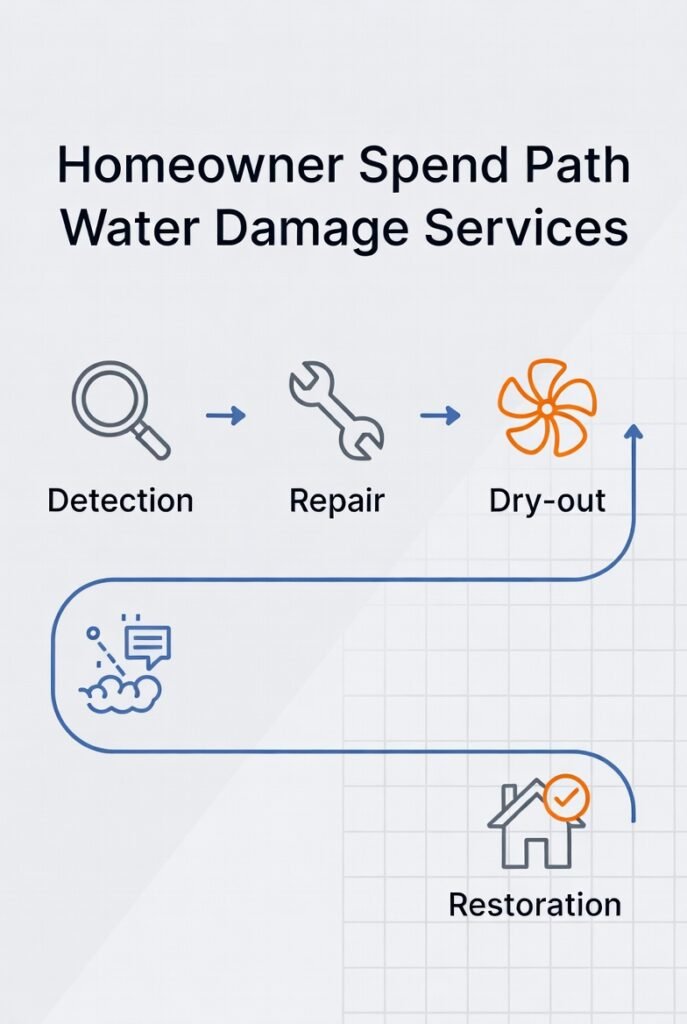
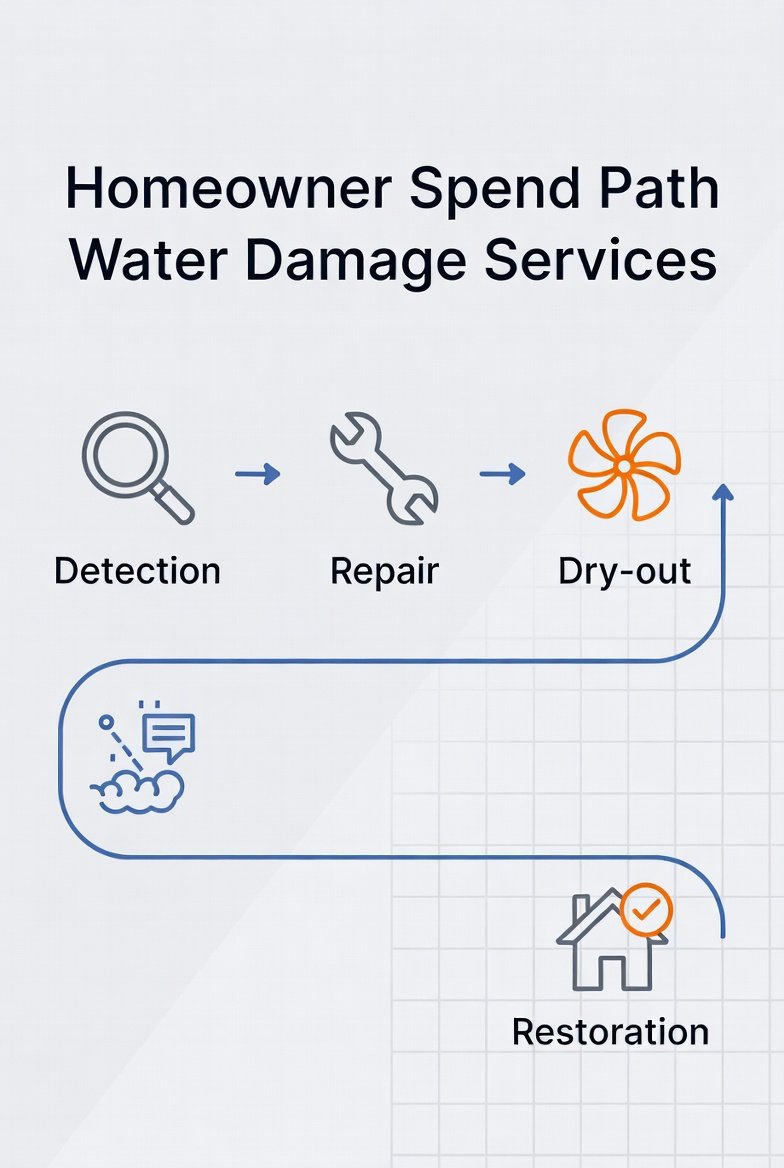
Typical Homeowner Spend Path (What Detection Prevents)
Many homeowners focus only on the diagnostic fee, but the real financial picture often looks like this:
Detection → Repair → Dry-out → Material restoration
Without detection, the repair phase sometimes starts with exploratory openings — which can multiply labor and restoration costs.
Paying for precision early often limits the total project scope.
What You’re Actually Paying For
A legitimate leak detection service usually includes:
- Confirming whether a leak exists
- Narrowing the affected zone
- Pinpointing the likely source
- Marking the location or defining a tight area
- Explaining repair paths
If confirmation and narrowing aren’t part of the process, it’s not true diagnostic work.
Flat Rate vs Hourly Leak Detection Pricing
Both pricing models are common — clarity matters more than the structure itself.
Flat Rate
Best for: typical residential calls
Advantage: predictable pricing
Ask whether the rate covers one suspected leak or the entire system.
Hourly
Often used when leak behavior is unpredictable.
Some guides reference hourly figures in the $75–$125 range in pool contexts, though totals depend on testing time.
Smart question to ask:
“Can you call me at a checkpoint if the leak isn’t narrowed after a certain number of hours?”
Transparency prevents surprise invoices.
The Factors That Move Leak Detection Pricing
1. Leak Location (Primary Cost Driver)
Accessible plumbing typically costs less to diagnose.
Prices often rise when leaks are:
- behind finished surfaces
- beneath slabs
- underground
- distant from entry points
Isolation simply takes longer.
2. Active vs Intermittent Leaks
Active leaks are easier to detect.
Intermittent leaks often require:
- repeated isolation
- extended monitoring
- multiple tools
Time — not equipment — is frequently what increases the bill.
3. Number of Areas That Must Be Tested
If symptoms point clearly to one location, diagnostics move faster.
Multiple possible zones expand the evaluation and increase labor time.
4. Detection Method Required
Advanced tools are typically used because the leak is harder to locate — not because someone is upselling you.
Examples:
- Thermal or moisture mapping: excellent for narrowing
- Acoustic equipment: strong for pressurized lines
- Tracer gas: often used when other methods cannot confidently pinpoint
Many companies also charge a minimum service call, which is normal in skilled diagnostic work.
Slab Leak Detection Cost — Quick Clarity
When slab plumbing is suspected, the diagnostic portion alone commonly falls within the $150–$600 range, though complexity often pushes pricing upward.
Repair is separate and varies widely depending on whether the fix involves spot repair, rerouting, or broader access.
Two smart questions:
- “Will you mark the exact location?”
- “How confident is the pinpoint before any concrete is opened?”
Precision matters most in slab environments.
Does the Detection Fee Get Credited Toward Repair?
Sometimes — but policies vary.
Before booking, ask:
- Is pricing flat or hourly?
- Is the fee credited if repair is approved?
- Are there conditions attached?
A credited fee doesn’t automatically mean the lowest total repair cost, so compare the full quote.
Red Flags That Often Lead to Higher Total Costs
- Skipping confirmation testing
- Recommending wall cuts immediately
- Signs of water leak
- Vague findings like “somewhere around here”
- No clear pricing model
- Pressure to approve repair before pinpointing
Detection should feel like investigation — not demolition.
Is Leak Detection Worth the Cost?
If the leak is visible and accessible, specialized detection may be unnecessary.
But for hidden leaks, diagnostics often prevent the most expensive outcome: paying repeatedly to open the wrong areas while damage spreads.
You’re essentially paying for certainty before committing to repair.
When Detection Should Be Considered Urgent
Act quickly if you notice:
- ceiling dripping
- water near electrical systems
- rapidly swelling drywall
- sudden pressure loss
- strong musty odors
- Water detection service near me
Delays often expand restoration scope far beyond the diagnostic fee.
The Bottom Line
Water leak detection is less about the service fee — and more about controlling the total cost of the problem.
When the source isn’t obvious, precise diagnosis helps ensure your repair budget goes exactly where it should the first time.
For a deeper look at what the service involves and what happens during a visit, see water leak detection services.