
Slab Leak Detection Near Me: How to Find the Leak Without Guessing
A slab leak is one of the few home problems where guessing gets expensive fast. Cutting the wrong floor, jackhammering the wrong spot, or “replacing a line just in case” can turn a repair into a renovation.
That’s why people search “slab leak detection near me.” You’re not just looking for a plumber—you’re looking for a local specialist who can confirm the leak, narrow the zone, and pinpoint the most likely location under the slab before anyone breaks concrete.
Professional leak detection commonly uses methods like acoustic listening, pressure testing, thermal imaging, moisture mapping, and in complex cases tracer gas to locate hidden leaks with less invasive work.
Unlike many plumbing issues, slab leaks can influence structural moisture conditions if left unresolved, which is why early confirmation matters.
Quick Box: What “Near Me” Means for Slab Leaks
For slab leaks, “near me” matters because it affects:
- response time (water damage and foundation water leak),
- local soil and slab construction familiarity,
- and whether the company has the right tools for below-slab pinpointing.
When a Slab Leak Is an Emergency (Do This First)
Call emergency help or shut off water immediately if:
- water is rising or spreading fast,
- it’s near electrical outlets or panels,
- ceilings are sagging below the suspected area,
- or you cannot stop flow at a fixture shutoff.
If you can safely do it, shut off the main water and take quick photos of the damage for records.
What Counts as a Slab Leak (Plain-English)
A slab leak is a leak in plumbing that runs under or within a concrete slab foundation. It’s usually one of two categories:
- Pressurized supply line leak — often urgent and capable of driving water bills up quickly.
- Drain line issue — typically diagnosed differently and may involve camera inspection.
This page focuses on slab leak detection (diagnosis and pinpointing), not the repair itself.
What Is the Fastest Way to Confirm a Slab Leak?
The fastest way to confirm a slab leak is professional confirmation testing followed by isolation and pinpointing. Because water can travel beneath concrete, surface symptoms rarely reveal the exact location — which is why diagnostic tools are used before any concrete is opened.
Many slab specialists note that unnecessary concrete breaks are among the costliest mistakes in leak repair, and they almost always trace back to skipped confirmation testing.
Slab Leak Warning Signs (What Usually Shows Up First)
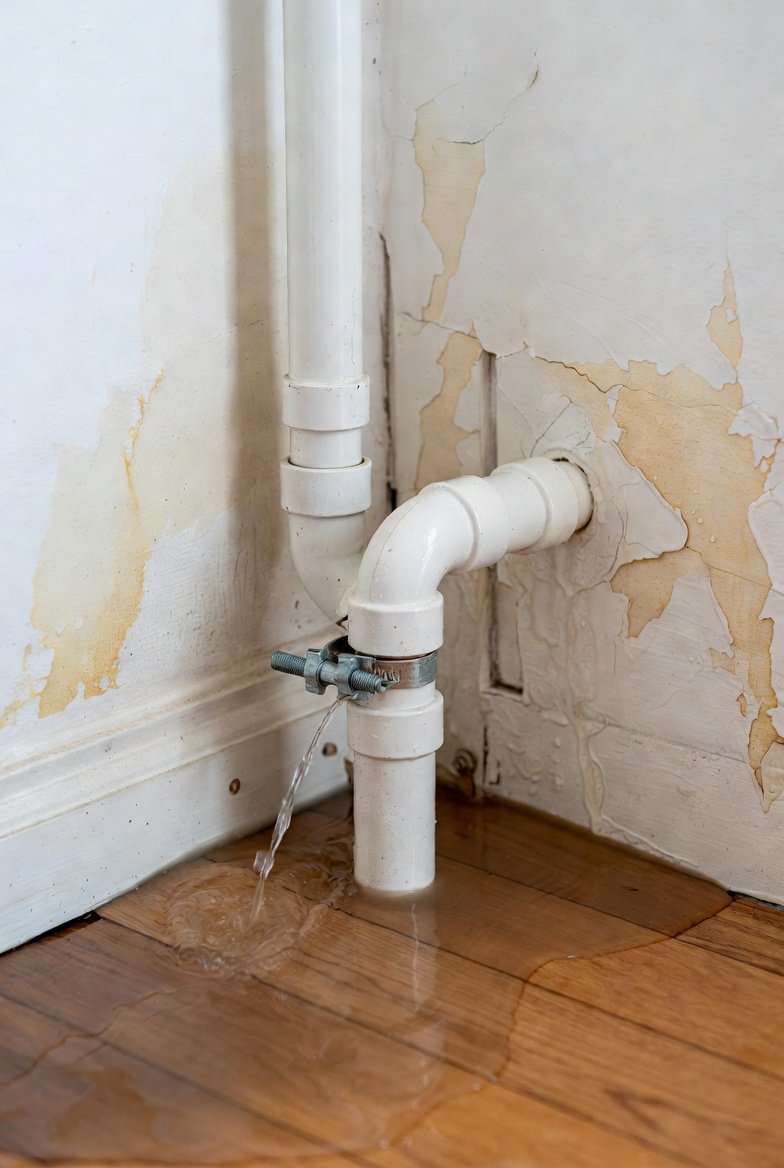
Common signs of a water include:
- unexplained spikes in the water bill
- warm or hot spots on floors (often suggesting hot-water line involvement)
- damp carpet, warped flooring, or damp baseboards
- persistent musty odors
- sounds of running water when fixtures are off
- cracks in tile or flooring that worsen with moisture movement
- occasional drops in water pressure
A single sign can mislead; a cluster is where professional detection becomes worthwhile.
Do This Before You Call (5-Minute Prep)
- Turn off all water use for about 10 minutes and listen for running-water sounds.
- If safe, check whether the water meter moves when nothing is running.
- Note any warm floor areas and which rooms they’re in.
- Take photos of visible damage (floor lifting, staining, baseboard swelling).
- Clear access to the main wet zone and water heater area.
Prepared homes often allow technicians to narrow the problem faster.
Who to Call for a Slab Leak (So You Don’t Waste a Visit)
Call a slab leak detection specialist when:
- you suspect the leak is under the slab,
- underground water leak
- pinpointing is needed before concrete is opened,
- symptoms are vague but potentially expensive if wrong.
Call a plumber (repair-first) when:
- the leak is visible and reachable,
- you already have a tight access zone from a detection report.
Call a camera/CCTV drain specialist when:
- you suspect a drain issue such as backups, odors, or slow lines.
Choosing the correct provider first often prevents repeat diagnostics.
What a Real Slab Leak Detection Visit Looks Like
A strong local specialist typically follows this sequence:
- Symptom and layout review (affected rooms, hot vs cold clues, recent work)
- Confirmation testing
- Water leak test
- Isolation and narrowing
- Precision pinpointing
- Marking the location or defining a tight access zone
- Repair-path guidance
Trace-and-access workflows commonly emphasize locating first and reducing unnecessary openings.
Tools Used for Slab Leak Detection (Best Use + Limitations)
Slab leaks usually require tool combinations rather than a single device.
Acoustic listening (major slab tool)
Uses sensitive microphones to detect vibration from pressurized leaks.
Best for: supply-line leaks
Limitations: loud environments, certain slab types, very small leaks
Pressure testing / isolation testing
Helps confirm a supply-line leak and narrow the affected section.
Best for: confirmation and narrowing
Limitations: not a pinpoint tool alone
Thermal imaging
Highlights temperature patterns consistent with moisture or hot-water lines.
Best for: hot-water clues
Limitations: requires confirmation
Moisture mapping
Tracks dampness gradients to narrow impacted areas.
Best for: documenting spread
Limitations: water can travel away from the origin
Tracer gas (tough cases)
Helps locate very small or intermittent leaks.
Best for: complex scenarios
Limitations: additional setup and often higher cost
What Slab Leak Detection Includes (and What It Usually Doesn’t)
Typically includes
- confirmation testing and narrowing
- pinpoint location or tight access zone
- markings and repair-path guidance
Often does not include
- the repair itself
- concrete break-out or restoration
- a guarantee of zero opening
Detection focuses on precision before disruption.
Typical Cost Range for Slab Leak Detection Near You
Local prices vary, but common patterns include:
- Standard diagnostic visit: about $200–$600
- After-hours or emergency dispatch: often $600–$1,000+
- Complex cases: higher when extended testing or tracer gas is required
Detection is usually a diagnostic fee; repair and restoration are typically separate.
For broader pricing context, see water leak detection cost.
Why Slab Leaks Get Misdiagnosed (And How to Prevent It)
Misdiagnosis often happens when:
- confirmation testing is skipped
- technicians listen without isolating lines
- moisture travel is mistaken for the leak origin
- demolition begins before a tight zone is defined
Decision rule: if someone recommends breaking concrete before confirmation and narrowing, you are likely paying for guesswork.
Red Flags (Local “Bad Actor” Patterns)
- “We don’t need tests—we’ll just open the floor.”
- Vague results with no markings or evidence
- No explanation of tool choice for slab conditions
- No clarity on what the fee covers
- Mid-visit pricing changes without checkpoints
Strong diagnostics reduce uncertainty — not increase it.
Questions to Ask Before You Book (Copy/Paste)
- “Will you confirm the leak before any concrete is opened?”
- “Which tools do you expect to use — and why?”
- “Will you isolate hot vs cold lines?”
- “What do I receive at the end — marking, photos, readings, summary?”
- “Is your fee flat-rate or hourly?”
- “Does it cover one leak source?”
- “Do you coordinate with the repair plumber?”
Clear answers usually signal structured operations.
What You Should Leave With (End-of-Visit Deliverables)
- Leak confirmed (or ruled out)
- Area narrowed
- Pinpoint location or tight access zone identified
- Markings and notes (often photos or readings)
- Clear next step for repair cost
Precision is the service you’re hiring.
Spot Repair vs Reroute (What Detection Helps You Decide)
A slab leak report typically leads toward one of two directions:
Spot repair: fix the failed section (requires access).
Reroute or repiping: bypass the slab section to reduce concrete work.
Strong detection allows this choice to be based on evidence rather than assumption.
Is Slab Leak Detection Worth It Before Breaking Concrete?
In most cases, yes — because precision dramatically reduces structural disruption. Confirming and narrowing the leak location before opening concrete often leads to smaller access zones, more targeted repairs, and fewer secondary restoration costs.
Bottom Line
Slab leak detection is worth it when you want the leak found before concrete is broken. The right local specialist confirms the leak, narrows the zone, and pinpoints the location — so repairs stay targeted and damage remains controlled.
For broader plumbing diagnostics, see water leak detection near me.
To compare providers, visit water leak detection companies.
For pricing expectations, review water leak detection cost.