
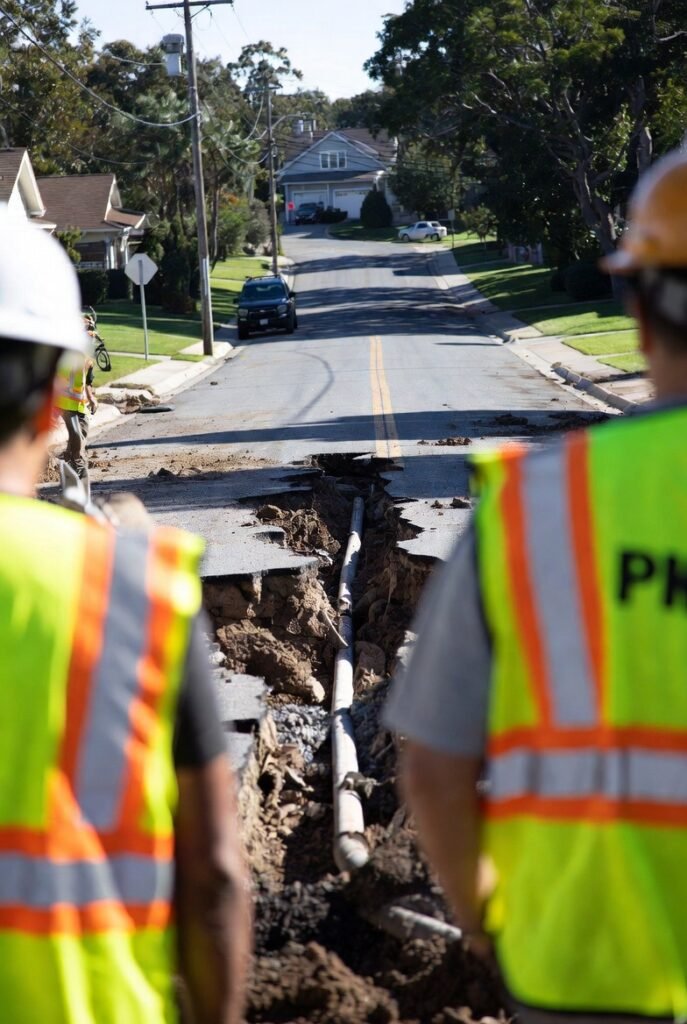
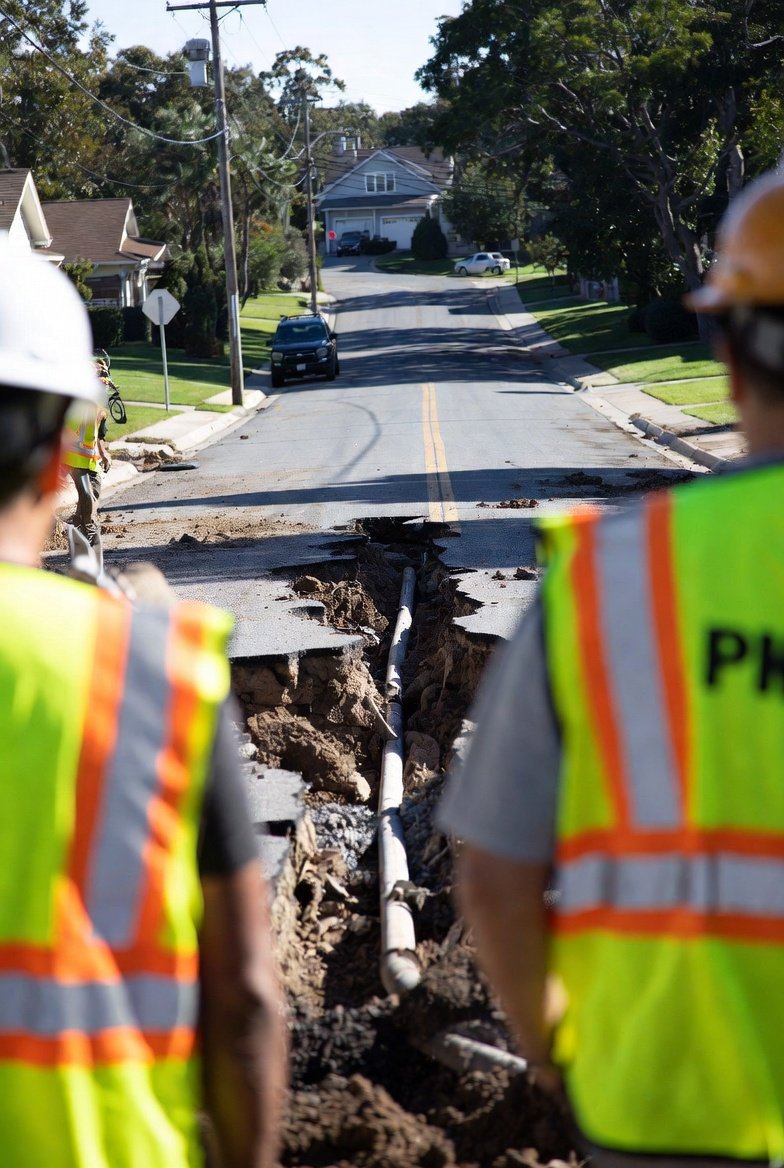
Main Water Line Leak Repair Cost: Excavation vs Trenchless (What You’ll Really Pay)
“Main water line repair” can mean two completely different jobs.
One homeowner pays a few hundred for a localized fix.
Another pays several thousand for full replacement under a driveway.
The difference isn’t the pipe.
It’s access, restoration, and scope.
There are two categories hiding under the same phrase:
Repair — Fix one failed section.
Replacement — Install a new line from meter to house (or long segment).
And the biggest cost split usually isn’t materials — it’s what you disturb to reach the pipe.
This guide breaks down:
- Repair vs replacement economics
- Excavation vs trenchless tradeoffs
- Permit and inspection costs
- Restoration realities
- The pricing drivers that actually move quotes
Quick Cost Ranges (Repair vs Replacement)
Targeted Repair (Isolated Break)
Commonly lands in the hundreds to low-thousands, depending on:
- Depth
- Surface type
- Access
- Emergency timing
National summaries often cite averages around ~$1,000, but real totals vary by site conditions.
Full Service Line Replacement
Often priced per linear foot plus mobilization and restoration.
Frequently cited per-foot ranges: $50–$150 per foot, though site complexity can push totals significantly higher.
Reported averages are often in the low-thousands, but:
Driveway removal
Concrete repour
Landscaping restoration
can push total project costs much higher than pipe work alone.
Step 1: Confirm Scope Before Pricing Anything
Before comparing quotes, confirm:
1️⃣ Is water actively being lost?
👉 Confirm active flow:
water-leak-test
2️⃣ Who owns the line?
👉 Utility vs homeowner boundary:
who-to-call-for-underground-water-leak
If the leak is before the meter, the utility often owns it.
After the meter is typically homeowner responsibility.
The Three Cost Buckets That Decide Your Quote
1️⃣ Section Repair (Small Dig)
Best when:
- Line is otherwise healthy
- Break is isolated
Primary cost drivers:
- Depth
- Soil conditions
- Surface access
2️⃣ Full Service Line Replacement (Meter → House)
Best when:
- Old galvanized or failing copper
- Repeated leaks
- Corrosion across multiple sections
Typically priced by:
- Linear footage
- Mobilization
- Permits
- Restoration
3️⃣ Hardscape Restoration (Driveway / Patio / Slab Edge)
This is where totals climb.
The pipe repair itself may be reasonable.
The surface restoration often dominates the final invoice.
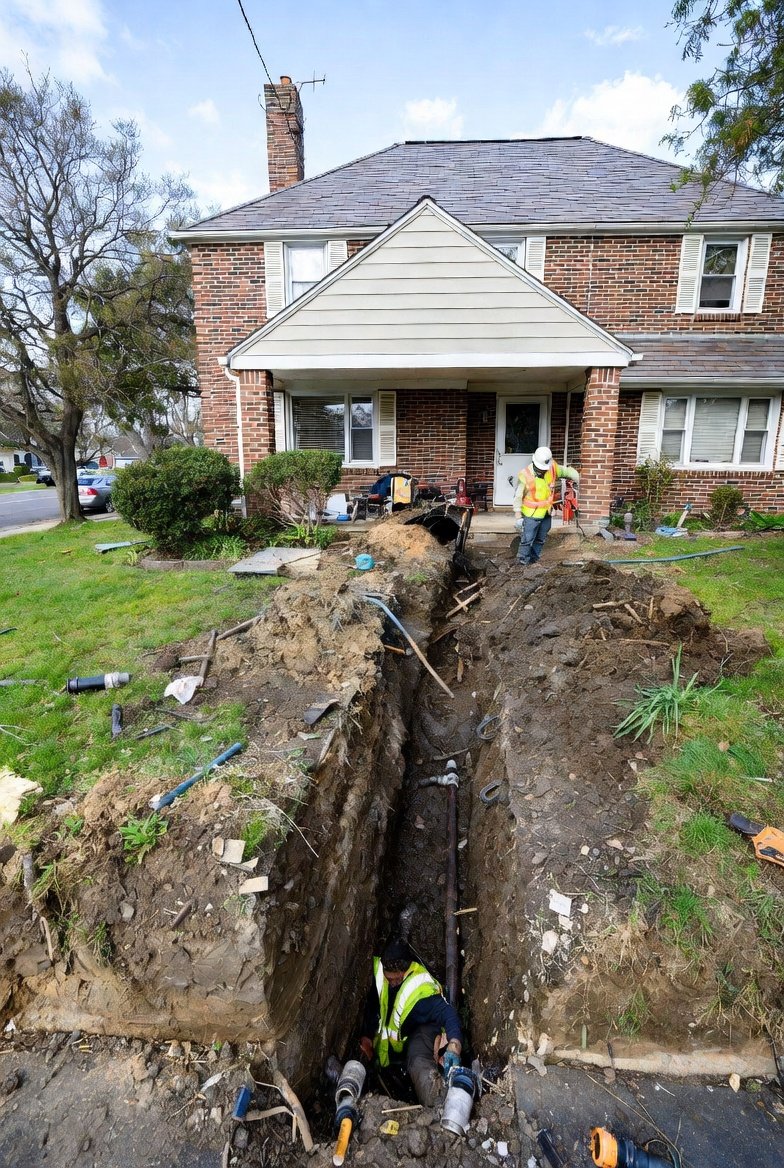
Excavation vs Trenchless: The Real Cost Comparison
Most pages oversimplify trenchless.
The real rule is:
Excavation is often cheaper for the pipe.
Trenchless is often cheaper for the property.
Method | Best For | Pros | Cons | Cost Shape |
Open trench | Shallow yard runs | Lower equipment cost | Heavy surface disruption | Lower pipe cost, higher restoration |
Directional boring | Driveways / landscaping | Minimal surface disruption | Not always feasible | Higher method cost, lower restoration |
Pipe bursting | Full replacement | Efficient long runs | Requires suitable path | Competitive on longer runs |
Trenchless becomes financially attractive when it avoids expensive demolition.
Permits & Inspections: Why Main Line Jobs Trigger Them
Service line replacement often requires:
- Municipal permits
- Licensed contractor
- Inspection before backfill
- Disinfection / pressure testing
Permit fees vary by jurisdiction.
If a contractor says no permit is needed for a full meter-to-house replacement, verify with your local building department.
Permits don’t always dominate cost — but ignoring them can create compliance issues later.
The Pricing Drivers That Move Quotes the Most
Depth
Shallow lines = faster.
Deep lines = more labor, potential shoring, more time.
Surface Type
Lawn = easier restoration.
Driveway / patio = saw-cut, haul-off, repour.
Length of Run
Replacement is often per-foot pricing.
Material & Condition
Old galvanized or brittle copper often shifts recommendation toward replacement rather than patch repair.
Restoration Scope
Landscaping restoration varies from minor reseeding to full hardscape reconstruction.
This is often the largest wild card.
Line-Item Model: What You’re Actually Paying For
Line Item | What It Covers | When It Appears |
Leak detection | Pinpointing failure | If location unknown |
Excavation labor | Digging, haul-off | Most jobs |
Pipe repair/replacement | Pipe, fittings, connections | Always |
Permits/inspection | City paperwork | Often replacement |
Disinfection/testing | System flush & verify | Replacement |
Restoration | Concrete / landscaping | If disturbed |
Emergency premium | After-hours response | Urgent cases |
Understanding these line items helps compare bids intelligently.
Pricing Scenarios (Most Common Outcomes)
Scenario A: One Break in Yard Line
Most likely: Targeted repair.
Commonly in the hundreds to low-thousands.
Scenario B: Old Line, Repeat Leaks
Most likely: Full service line replacement.
Total = footage + permits + restoration.
Scenario C: Under Driveway or Patio
Restoration often drives total cost.
Trenchless may reduce overall disruption and expense.
Detection vs Repair: Keep Them Separate
If you haven’t located the break, you’re pricing blind.
Detection typically costs in the hundreds depending on complexity.
👉 Detection overview:
underground-water-leak-detection
👉 Detection cost model:
underground-water-leak-detection-cost
Detection reduces unnecessary excavation.
It does not include pipe replacement.
Repair vs Replacement Decision Boundary
Repair Makes Sense When:
- Pipe is relatively new
- Failure is isolated
- No repeated leaks
- Access is simple
Replacement Makes Sense When:
- Multiple failures in 12–24 months
- Widespread corrosion
- Already paying for major excavation
- You want long-term reliability
How to Lower Total Cost (Without Making It Worse)
✔ Confirm active water loss first
✔ Identify meter location
✔ Mark irrigation lines
✔ Ask for restoration scope in writing
✔ Ask if detection fees credit toward repair
✔ Request full written scope (length, material, permit plan)
Prepared homeowners reduce change-order surprises.
Limitations & Reality Checks
Online averages don’t know:
- Your surface type
- Your depth
- Your municipality
- Your restoration scope
Trenchless isn’t always feasible.
Restoration can dwarf pipe cost.
Permit requirements vary widely.
Every quote is site-specific.
Related Guides
Confirm water loss first:
water leak test
Water line detection workflow:
water-line-leak-detection
Detection methods explained:
underground-water-leak-detection
Detection pricing:
underground-water-leak-detection-cost
Full leak repair cost ranges:
water-leak-repair-cost
FAQ
How much does a main water line leak repair cost?
Targeted repairs often land in the hundreds to low-thousands depending on depth and surface conditions.
How much does it cost to replace the main/service line?
Replacement is commonly priced per linear foot and varies widely. Frequently cited ranges like $50–$150/ft exist, but total cost depends heavily on restoration and access.
Is trenchless replacement cheaper than excavation?
It can be cheaper overall when it avoids expensive driveway or landscape restoration.
Do I need a permit to replace my service line?
Often yes. Many cities require permits and inspection for meter-to-house replacements.
What costs more: pipe work or restoration?
On driveway or patio jobs, restoration often becomes the largest cost driver.
How long does a main water line repair take?
Simple yard repairs can be same-day. Replacement with permits and restoration can extend to multi-day projects.